

Platform Development and Management

A high-performance e-commerce platform is the backbone of your online business — and that's exactly where we start.
Platform Development Across the Full Lifecycle
From technology selection and architecture planning to ongoing development and refinement, we guide you through the entire platform lifecycle. We build on proven systems like Shopware and extend them with custom functionality tailored precisely to your processes, delivering a stable, scalable platform that performs today and grows with you tomorrow.
The essentials of Platform Development and Management
- We cover the entire platform lifecycle: from technology selection and architecture planning to ongoing development and maintenance.
- We build on Shopware 6 and cleanly encapsulate shop-specific extensions away from the core, so updates and security patches can be applied without overwriting custom code.
- We ship in two-week sprints and test every change in staging against the live state first, instead of waiting for one big-bang release.
- Before the platform choice we analyse your business model, catalog and integration landscape – Shopware 6 storefront, headless or hybrid – to avoid expensive switches after go-live.
- The result is a stable, scalable platform you run with defined SLAs and a fixed point of contact, and that stays maintainable for years.




Real E-Commerce Successes
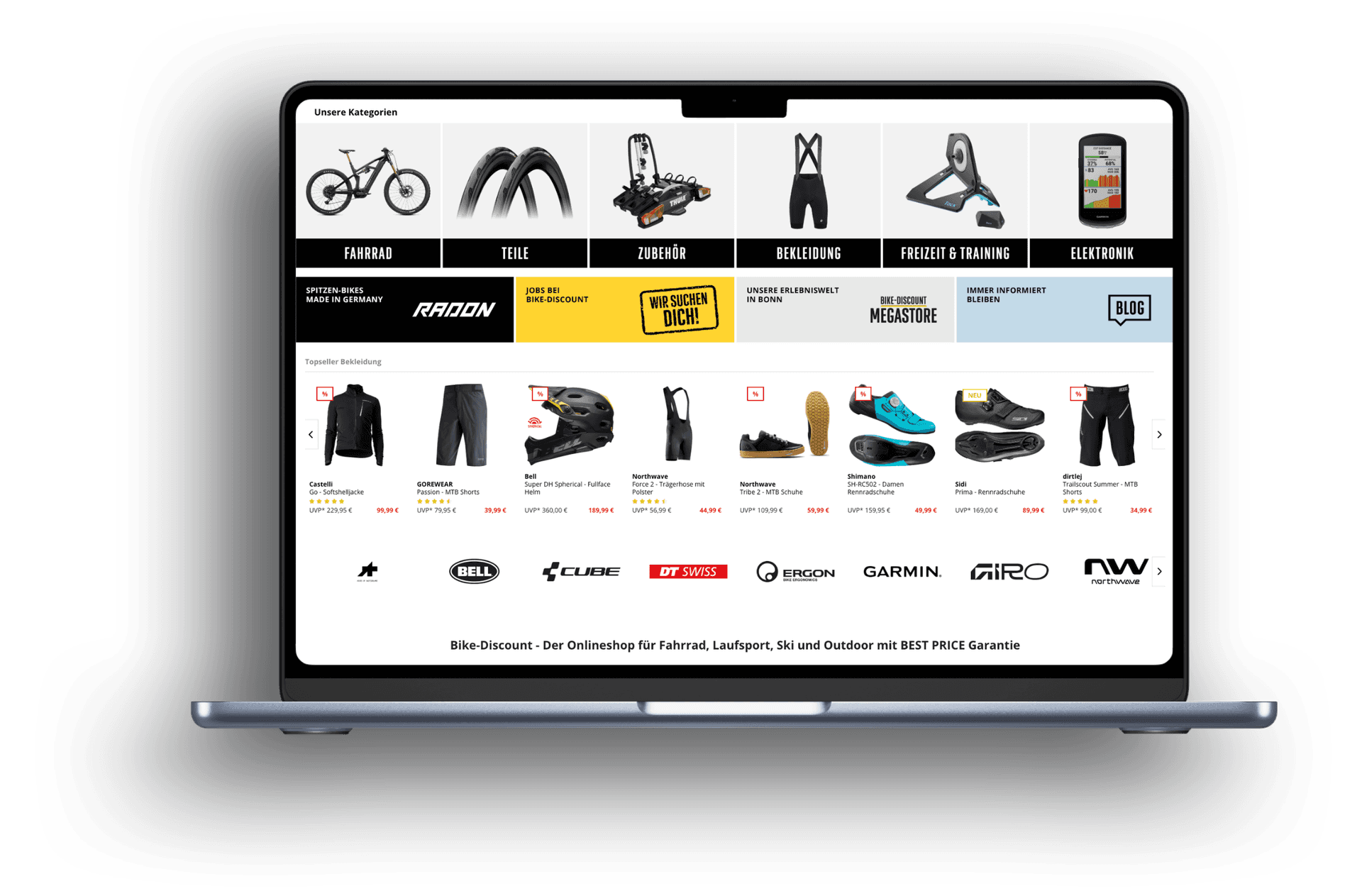
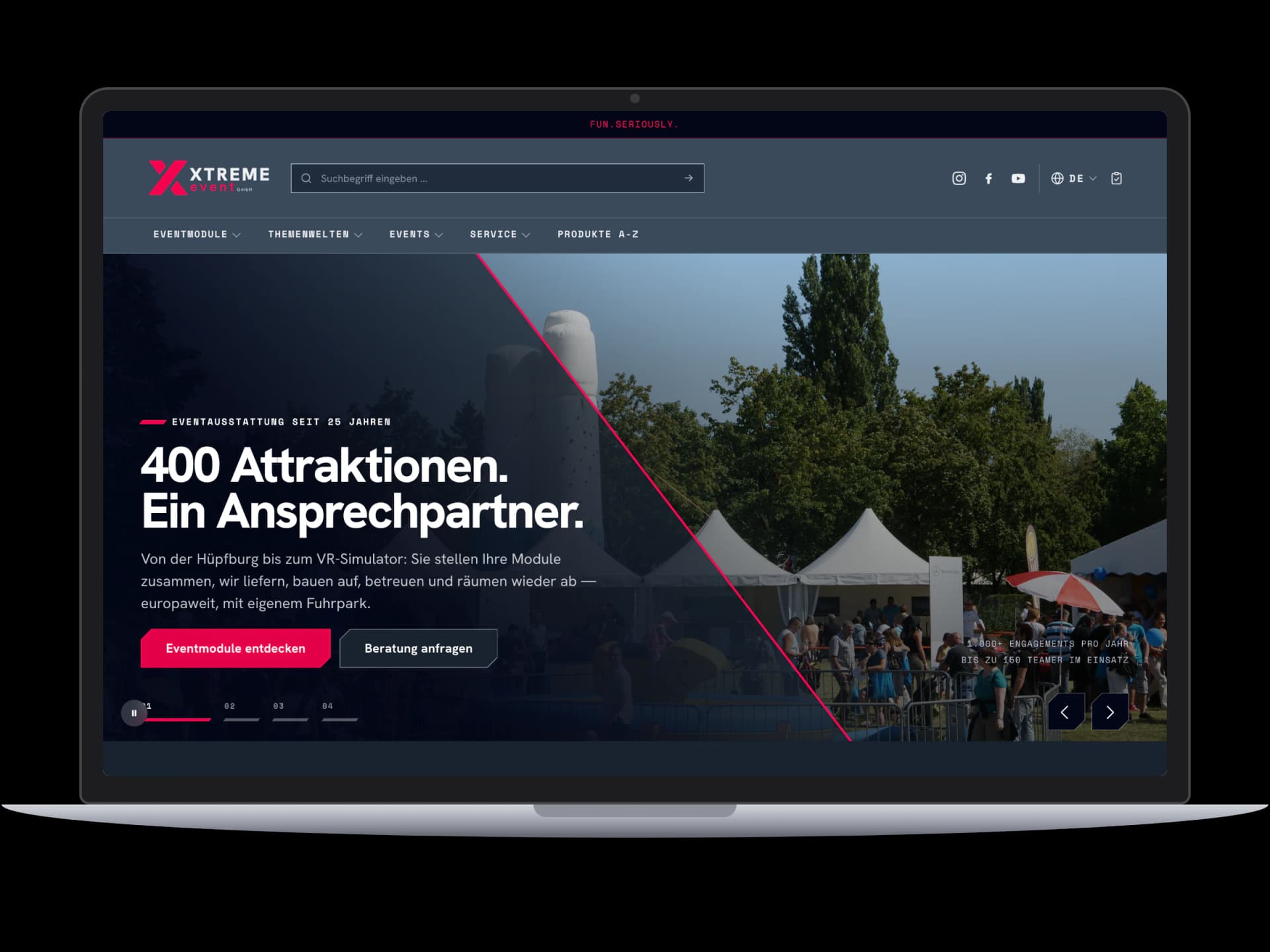

- Your current shop platform makes every new feature a gamble — changes risk breaking something else in production.
- You're unsure which platform fits your business model long-term and worried about making a costly wrong call.
- After launch, nobody systematically handles updates and security patches until something breaks in production.
Platform Development and Management: services in detail
- Shopware 6 DevelopmentShopware 6 is a powerful foundation for your online store — but it only reaches its full potential with clean, tailored development on top of it. We build plugins, themes, and extensions that fit your processes precisely, without touching the Shopware core. The result: a shop that stays update-safe, runs reliably, and grows alongside your business.Learn more
- Theme & Template DevelopmentYour shop is the digital face of your brand — a generic default theme makes it interchangeable. We build custom Shopware themes and templates that implement your branding precisely, work on every device, and remain update-safe. From design alignment to final handoff, we work closely to your requirements and deliver a visual identity that builds trust and converts.Learn more
- Shop Maintenance & SupportA live shop needs continuous care — security patches, plugin updates, and compatibility checks before issues arise in production. We take over the ongoing maintenance of your Shopware shop with defined SLAs, a direct point of contact, and proactive monitoring. Your shop stays current, secure, and stable without you managing update cycles yourself.Learn more
Platform lifecycle: from selection to ongoing operations
Platform development is not a one-time project but a continuous cycle. Each phase builds on the previous one, creating the foundation for stable, predictable growth.
Technology selection
System comparison based on your processes, team structure, and growth goals – Shopware Storefront, headless, or hybrid.
Architecture planning
Clean separation of the Shopware core from custom extensions, so updates never put production at risk.
Agile development
Two-week sprints with staging tests and real feedback – wrong assumptions surface early, while corrections are still affordable.
Launch & deployment
Repeatable, automated deployment process: every release as safe as the last.
Maintenance & evolution
Proactive update cadence, security patches, and continuous optimisation – the platform stays flexible instead of stagnating.
The cycle repeats: every extension round is followed by another round of planning and testing.
What matters most in platform management
Not all platform concerns carry equal weight when it comes to long-term stability. This ranking shows where disciplined practice delivers the greatest leverage.
- Core / extension separationProtects production on every update
- Automated tests for critical pathsMakes frequent releases safe and predictable
- Short development cyclesCatch wrong assumptions early and cheaply
- Documented architecture decisionsKeeps the team independent of the agency
- Proactive update cadencePrevents risky big-bang releases after long stagnation
Relative weighting
Relative importance for platform longevity and maintainability – not measured metrics.
What matters for Platform Development and Management
Running a platform well starts with drawing a clean line between the core and what is genuinely yours. Anything Shopware already ships, you do not rebuild, and anything truly specific to your business you wrap so it never gets in the way of an update. Drawing that line is the real architecture work, and it decides whether you stay agile in two years or end up slowed down by your own software.
Solid platform management shows in how change is handled. If every adjustment is first tested in staging against the live state, automated tests cover the critical paths, and deployments are repeatable, you can ship often and calmly. If they are not, releases get pushed back until they are large and dangerous, and you live with dread every time you press the button.
The difference between careful and sloppy execution rarely sits in a single feature but in the untested assumptions underneath it. Short cycles with real feedback expose wrong assumptions early, while fixing them is still cheap. Just as important is that your own team can make changes itself, because a platform that needs an agency for every small thing is not a strength but a dependency.
In the end, discipline in the basics pays off. Versioned code, documented decisions and a clear update rhythm sound unspectacular, yet they are exactly what keeps a platform viable over years. A polished frontend means little if the foundation wobbles with every change.
Platform choice is infrastructure
Choosing between Shopware 6 Storefront, a headless setup, or a hybrid has direct consequences for development costs, deployment complexity, and how much your own team can change independently. Switching after go-live is expensive — that's why thorough analysis before the decision pays off.
Modular architecture protects production
When shop-specific extensions are cleanly separated from the Shopware core, platform updates can be applied without overwriting custom code. This is the main reason some shops stay up to date effortlessly while others spend weeks fixing regressions after every update.
Short sprints reduce project risk
Instead of a single large release after months of development, two-week sprints allow feedback to surface early and course corrections before they get expensive. Risk doesn't live in individual features — it lives in unvalidated assumptions, which short cycles expose much sooner.
A store built to scale
A platform is only worth the growth it carries. We build your shop foundation as developers who own every line of code — and make stability, release speed and maintainability measurable.
Developers, not resellers
Your platform is built by developers who understand the code — nothing is handed to subcontractors.
Releases without friction
A modular architecture ships new features in days instead of months.
Technology with a reason
Every tech decision follows your requirements, not the latest hype.
Support that stays
Maintenance and proactive development are planned in — long after go-live.


How fit is your Shopware shop?
Enter your shop URL – the Shopware audit checks 25+ data points on performance, security, SEO and Shopware setup in 30 seconds.
Audit my shopFrequently asked questions
Your question isn't here? Ask us directly
Which e-commerce platforms do you develop?
Our focus is on Shopware 6 — both as a classic storefront and as a headless setup with a decoupled frontend. We also support migrations from legacy systems and work with you to evaluate which platform best fits your business model and growth plans.
How long does it take to develop a new online shop?
It depends heavily on scope: a close-to-standard Shopware shop can often go live in 8–12 weeks, while a complex B2B project with custom workflows can take considerably longer. After an initial requirements workshop, we define a realistic timeline together and stick to it.
Can we migrate an existing platform without disrupting ongoing operations?
Yes, that's a core scenario for us. We plan migrations so your current shop runs fully until the go-live date. Data migration, redirect management, and parallel testing phases are standard procedure to make the transition predictable and well-safeguarded.
Do you take care of ongoing maintenance after launch?
Yes, we offer maintenance contracts with defined SLAs that cover regular updates, security patches, and a prioritized support channel. Many of our clients have been with us since their first launch, and we grow as a partner alongside their business.
How do you ensure the shop stays stable during traffic spikes?
We run load tests before launch to simulate peak scenarios and tune the server infrastructure accordingly. Caching layers, horizontal scaling, and a CDN ensure your shop performs reliably even during seasonal spikes like Black Friday — without last-minute scrambling.
Last updated on
Ready for your successful online shop?


Related articles from our blog