

Conversion Optimization for Online Shops

More traffic is expensive – getting more out of the traffic you already have is the bigger lever.
More Revenue from the Traffic You Already Have
We analyze, based on data, where your shop loses visitors, derive hypotheses and validate them with A/B tests. From the product page through the checkout to load time, we optimize the points that demonstrably move the conversion rate – so measurably more visitors become customers.
The essentials of Conversion Optimization for Online Shops
- We get more out of the traffic you already have instead of buying expensive new traffic, and optimise the product page, checkout and load time where it demonstrably counts.
- We start with funnel analysis, heatmaps and session recordings to find the real bottlenecks, rather than polishing pages that aren't causing the problem.
- We apply the biggest lever at the checkout: fewer form fields, the right payment methods and guest checkout, because every avoided drop-off here is almost a guaranteed order.
- We derive testable hypotheses and validate them with controlled A/B tests, so every change is proven and you don't optimise on a hunch.
- We establish a repeatable CRO process of measuring, testing and learning with clean, privacy-compliant tracking, so your shop keeps getting better.




Real E-Commerce Successes
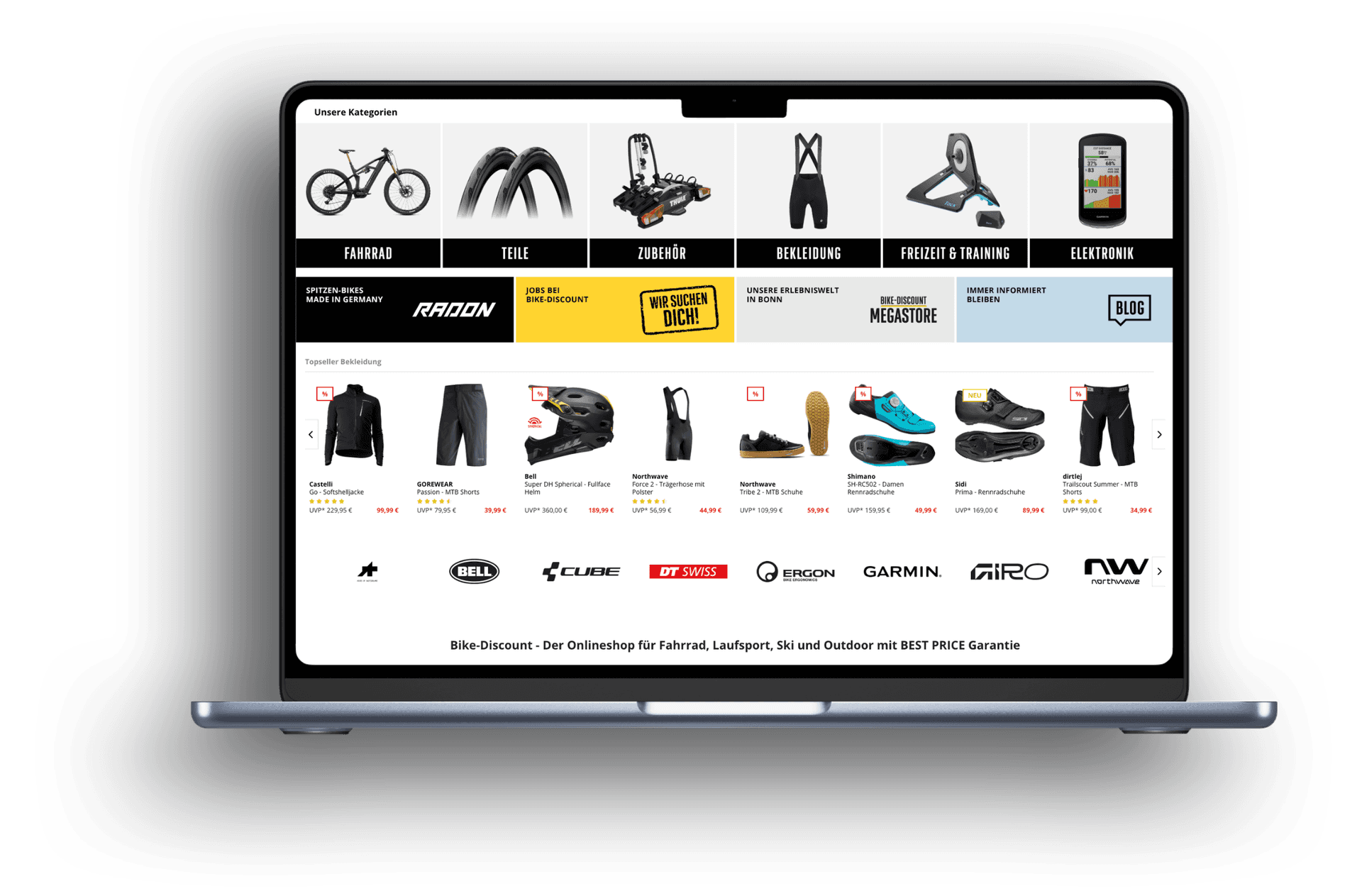
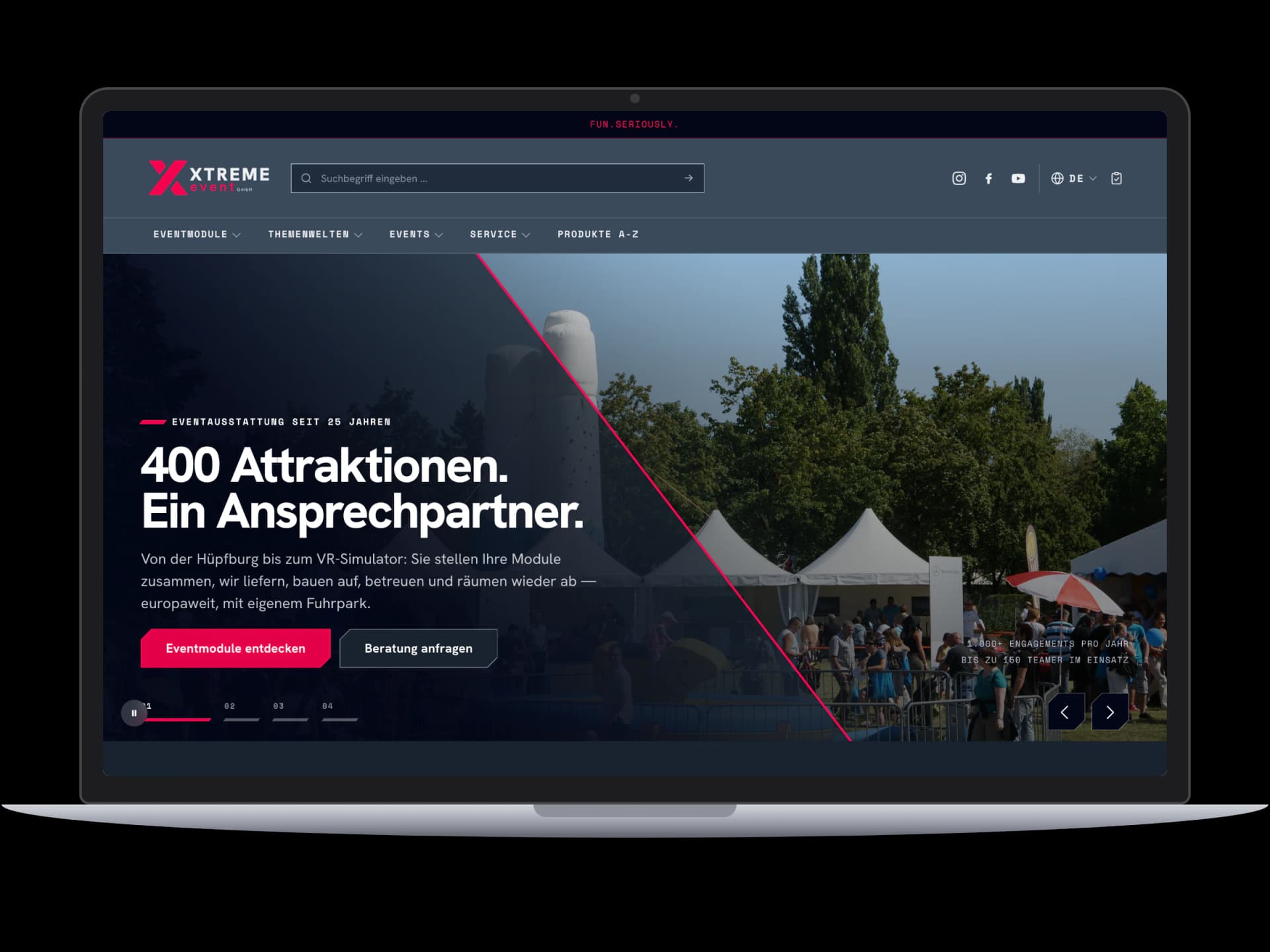

- You have visitors in the shop but too few of them actually buy – and you don't know exactly why.
- Many carts get filled, but customers abandon again at checkout.
- Changes to the shop are made on a hunch, without anyone measuring whether they actually help.
Conversion Optimization for Online Shops: services in detail
- A/B TestingData-driven decisions instead of gut feeling: A/B testing shows you with statistical confidence which variant of your shop converts better. We derive hypotheses from real user data, set up tests with methodological rigour, wait for sufficient sample size, and interpret results so you understand what you've learned — not just which number is larger. Every test becomes a building block of your optimisation knowledge.Learn more
- Checkout OptimisationThe checkout is the most expensive point for drop-offs — customers are highly motivated, yet a significant share leave the process without completing an order. We analyse your checkout with funnel analysis, session recordings, and user tests, identify the friction points, and eliminate them systematically. Shorter forms, the right payment methods, clear communication — small checkout improvements translate directly into more completed orders. Since 19 June 2026, shops also need a withdrawal button under Section 356a BGB alongside the order button.Learn more
- Product Page OptimisationThe product page is the most important decision-making resource for your customers — copy, images, reviews, and trust elements determine whether they buy or bounce. We analyse your product pages with heatmaps, scroll analysis, and user tests, identify the elements that cost or are missing from trust, and optimise layouts, content, and CTAs systematically. The goal is a product page that supports purchase decisions rather than hindering them.Learn more
Where your shop loses visitors
Not every stage in the funnel is equally critical. The diagnosis reveals where the most traffic drops off – and where optimization has the greatest impact.
Landing page & entry
First impression: relevance, load time and a clear message decide whether the visitor stays.
Product page
Images, copy, trust signals and CTA placement shape the purchase decision.
Shopping cart
Upsell potential and first drop-offs – shipping costs and uncertainty take effect here.
Checkout
Highest motivation, highest friction: forced registration, form fields and payment options are decisive.
Order & confirmation
Completion and the immediate foundation for repeat purchase and referral.
Every stage that becomes more frictionless improves all downstream stages.
The CRO process at a glance
Conversion optimization is not a one-off project but a repeatable cycle of diagnosis, hypothesis, test and learning.
Analysis & diagnosis
Funnel data, heatmaps and session recordings reveal where visitors actually drop off.
Derive hypotheses
Real bottlenecks become prioritized hypotheses – not the favorite ideas from last week's meeting.
Set up A/B test
Controlled variant vs. original, with clean tracking and sufficient runtime.
Evaluate & decide
Measurement separates proven improvements from subjective preferences – variant wins or is dropped.
Implement & iterate
Roll out the winner, document insights, move to the next hypothesis.
Quick fix for critical drop-offs
If data reveals an obvious error (e.g. a broken payment route), it is fixed immediately – no test run needed.
Each iteration builds on the knowledge of the previous one.
What matters for Conversion Optimization for Online Shops
Conversion optimisation starts with the question of where visitors are actually lost, not with the favourite idea from the meeting. Funnel analyses, session recordings and honest data reveal the real bottlenecks, and they often sit somewhere other than assumed. Optimise without that diagnosis and you polish pages that are not causing the problem.
The biggest lever sits close to the money. In the checkout visitors are already highly motivated, so every avoided drop-off there is almost a guaranteed order. Friction like forced registration, missing payment methods or overly long forms has disproportionate impact here, while a prettier banner higher up the funnel moves almost nothing.
What separates good from weak optimisation is the willingness to be measured. A change can lift or lower conversion, and without clean tracking that stays invisible. Only measurement separates proven improvements from subjective preferences and turns gut feeling into a controllable discipline. How we set up and validate that measurement foundation is covered on our Tracking & Analytics page.
Optimisation is a process, not a one-off project. The value emerges over many iterations in which you learn not just which variant wins but why. That accumulated knowledge about your users is ultimately worth more than any single uplift, because it makes every later decision better.
Conversion optimization scales cheaper than traffic
Buying additional traffic gets more expensive with every ad. Getting more out of existing traffic, by contrast, acts on every single visitor – a conversion rate a few percentage points higher raises revenue without increasing the ad budget.
The checkout is the costliest drop-off point
At checkout visitors are already highly motivated – every abandonment here costs an almost certain order. Friction like forced registration, missing payment methods or too many form fields therefore has a disproportionate impact on revenue.
Without measurement every change is guesswork
A design change can improve or worsen conversion – without clean tracking and A/B tests that stays invisible. Only measurement separates proven improvements from subjective preferences and makes optimization controllable.
More revenue from the same traffic
Getting more from existing traffic is a bigger lever than buying more. We optimise data-driven and prove every improvement with A/B tests.
Revenue from existing traffic
More revenue from the traffic you already have — without a bigger media budget.
Data over gut feeling
Hypotheses come from real behavioural data, not opinions.
Proven impact
Controlled A/B tests show what actually converts.
Friction-free checkout
Fewer abandoned carts through a measurably simpler checkout.


Let 6 AI buyers tear your landing page apart
6 AI buyer personas, 3 conversion audits and a legal check read your page like real customers – and deliver a prioritized kill report with concrete fixes.
Roast my landing page for freeFrequently asked questions
Your question isn't here? Ask us directly
From what level of traffic is conversion optimization worthwhile?
A/B tests need a certain data volume to deliver statistically reliable results – as a rough guide, a few hundred conversions per month. With less traffic we rely on qualitative methods like heatmaps, session recordings and best-practice optimizations that work even without a large sample.
How quickly do I see results?
Quick levers like a lower-friction checkout or better load times often take effect within a few weeks. A/B tests need runtime to become statistically meaningful. Conversion optimization unfolds its full effect as an ongoing process across several iterations.
Do you just change the design by feel?
No. Every measure is based on a hypothesis derived from data and – where possible – validated with an A/B test. That distinguishes real improvements from chance and avoids a subjectively nicer variant actually selling less.
Does clean tracking work despite privacy rules and cookie banners?
Yes. We set up a privacy-compliant tracking setup that works with consent management and – where necessary – uses server-side tracking and modeled data. You get reliable conversion data without violating GDPR requirements.
Do you work with our existing shop or only on new projects?
We optimize existing shops – that's where the biggest lever lies, because traffic and data already exist. Conversion optimization is independent of whether we originally built the shop; we analyze the current state and act where the data shows potential.
Last updated on
Ready for your successful online shop?


Related articles from our blog