

Product Page Optimisation

The product page is the most important decision-making resource for your customers — copy, images, reviews, and trust elements determine whether they buy or bounce.
Product Pages That Convert
We analyse your product pages with heatmaps, scroll analysis, and user tests, identify the elements that cost or are missing from trust, and optimise layouts, content, and CTAs systematically. The goal is a product page that supports purchase decisions rather than hindering them.
The essentials of Product Page Optimisation
- We analyse your product pages with heatmaps, scroll analyses, and user tests and find the elements that cost trust, get overlooked, or are missing.
- We make the product page the digital salesperson: complete information, clear images, and credible social proof replace the sales conversation.
- We use recurring customer enquiries about dimensions, materials, or delivery time as a concrete optimisation list and answer exactly those gaps on the page.
- We optimise the add-to-cart CTA in position, text, and surroundings and add contextual notes like delivery date or return policy right next to it.
- Through structured data (Schema.org Product with AggregateRating) we bring star ratings into the search results as rich snippets.




Real E-Commerce Successes
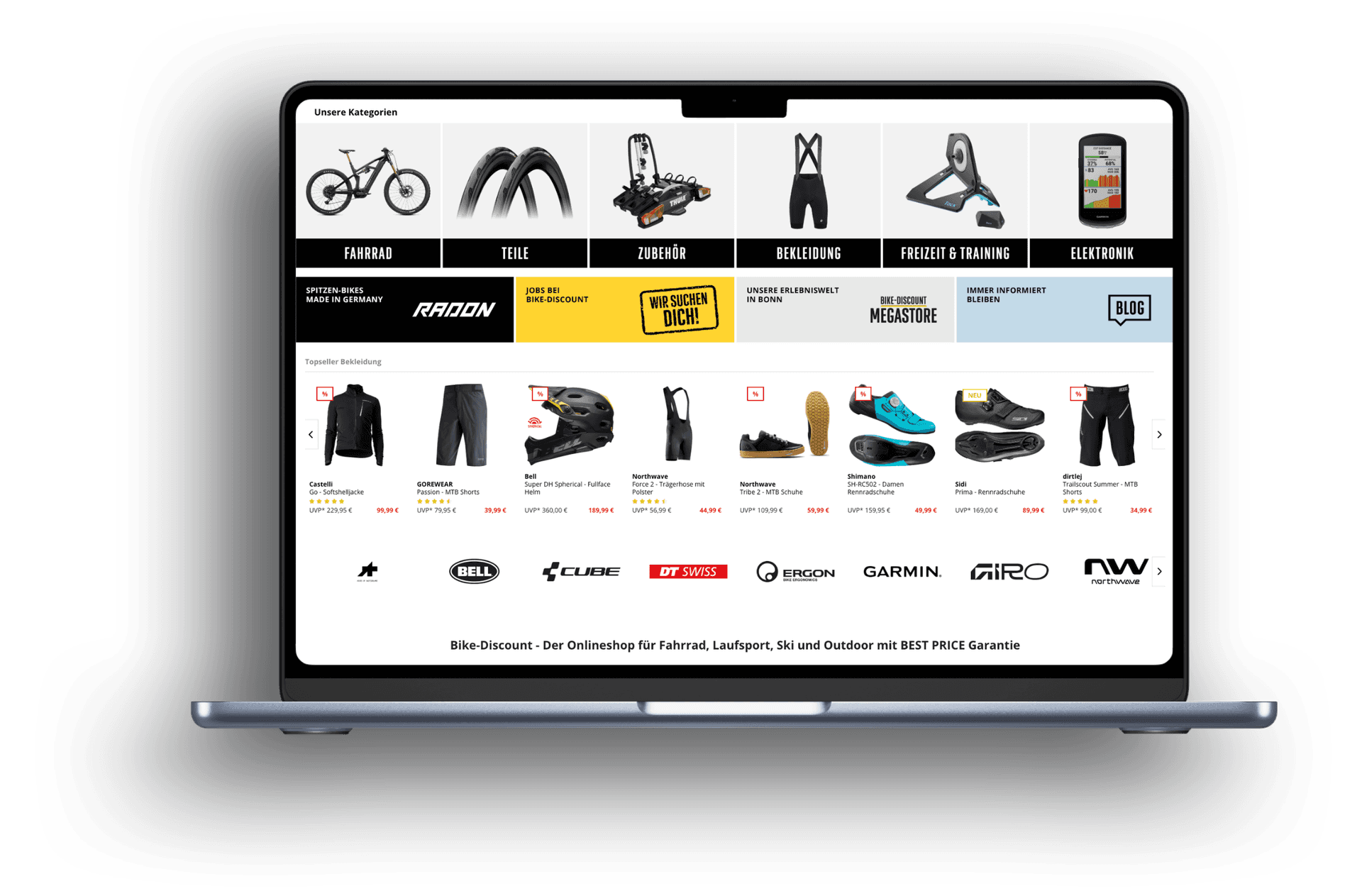
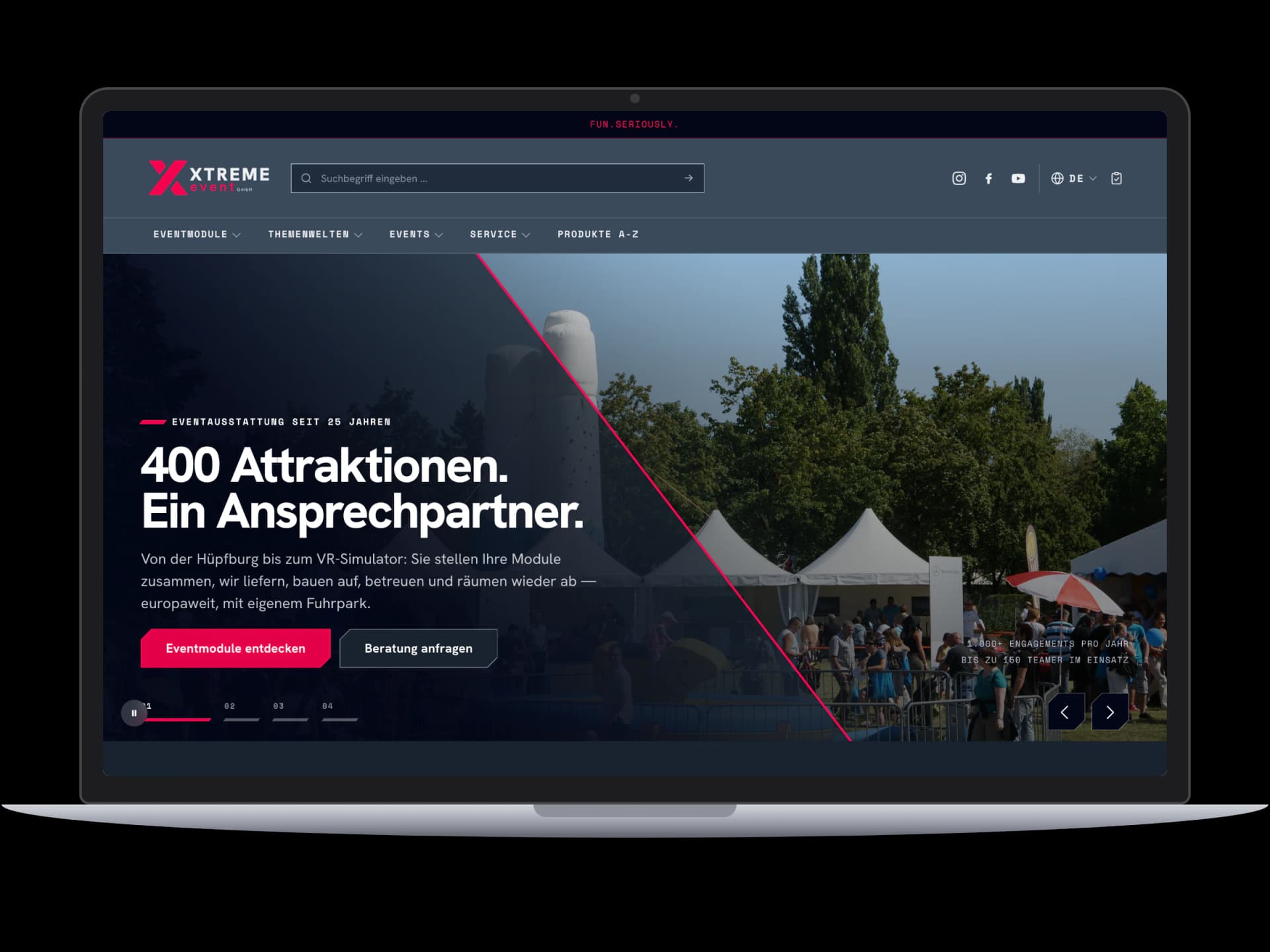

- Product pages have high bounce rates but you don't know whether it's due to missing information, poor images, or lack of trust.
- Customers frequently ask the same questions — about dimensions, materials, delivery times — because this information is missing from the product page or hard to find.
- Reviews exist but are not prominently placed or not integrated into Google search results.
Content Analysis
Product copy that lists features instead of communicating benefits, low-quality images, and missing information about shipping, returns, and availability — all of this costs trust and conversions. We analyse your top product pages for content quality and recommend concrete improvements to copy, images, and information hierarchy.
CTA Optimisation
The add-to-cart button is the most important interactive element on the product page. We optimise position, size, colour, text, and surroundings of the CTA, as well as behaviour for variant selection, inventory levels, and pre-orders. Contextual additions like delivery date or return policy directly next to the CTA reduce last purchase barriers.
Images & Media
High-quality product images from multiple perspectives, zoom functionality, 360° views, and — where appropriate — product videos are decisive purchase factors for many categories. We advise on the optimal media strategy for your product categories and implement image galleries, zoom, and video embedding technically cleanly and load-time optimised.
Social Proof & Trust
Reviews, Q&A, buyer photos, and trust seals reduce uncertainty in the purchase process. We integrate review systems, optimise the display of reviews on the product page, and implement rich snippets so star ratings are visible in search results too.
Optimising product pages: our approach
We improve product pages data-first — from analysing real user behaviour through targeted content revisions to the technical implementation of structured data.
Behaviour analysis
Heatmaps, scroll analysis, and user tests reveal which elements are overlooked or cause drop-off.
Gap audit
Missing information, weak CTAs, and invisible trust elements are systematically documented.
Content & layout
Copy, images, and page structure are revised so that open customer questions are answered on the page.
CTA optimisation
Calls-to-action are aligned to purchase decisions in wording, placement, and visual weight.
Structured data
Schema.org markup (Product, AggregateRating) makes reviews visible as rich snippets in search results.
Each phase builds on the findings of the previous one, rather than rebuilding blindly.
Purchase decision: relative weighting of page elements
Not all elements of a product page influence the purchase decision equally — this framework shows the relative priority when optimising.
- Social proof & reviewsTrust built through real customer voices and star ratings
- Product images & mediaReplaces tactile experience online — missing detail costs conversions
- Product information & specificationsUnanswered questions about dimensions, materials, and delivery drive bounces
- Call-to-actionWording, placement, and visibility determine click or abandonment
- Structured data (Schema.org)Rich snippets increase CTR from search before the user even visits the page
Relative weighting
The weightings are intended for prioritisation in the optimisation process, not as measured individual values.
What matters for Product Page Optimisation
The product page has to take over the salesperson's role entirely. Unlike in a shop, there is nobody here to answer questions and clear up doubts, so complete information, clear images and credible social proof have to replace the sales conversation. Every open question the customer cannot find answered on the page is a potential drop-off.
Recurring customer enquiries are the most honest optimisation list you will get. When the same questions about dimensions, material or delivery time keep coming, those exact answers are missing from the page. Every repeat question is a concrete pointer to a content gap and thus a chance to resolve a future buying obstacle in advance.
Optimisation should rest on real behaviour, not on taste. Heatmaps, scroll analyses and user tests reveal which elements cost trust, get overlooked or are missing, long before gut feeling suspects it. Only on that basis can layout, content and call-to-action be improved deliberately, instead of rebuilding in the dark.
Existing reviews often waste their impact. They should not only be placed visibly but also reach the search results as rich snippets through correct structured data, because star ratings measurably raise the click-through rate. Without schema markup this trust lever stays visible on the page but unused in search.
Product page is the digital salesperson
Unlike physical retail, there is no staff member to answer questions and resolve uncertainties. The product page must fully take on this role — complete information, clear images, and social proof are the substitute for the sales conversation.
Customer enquiries are improvement signals
When customers repeatedly ask the same questions, those answers are missing from the product page. Each repeated question is a concrete signal about an information gap that can be fixed — and an opportunity to reduce future purchase barriers.
Rich snippets bring reviews into search
Star ratings in Google search results measurably increase click-through rate. Without correct structured data (Schema.org Product with AggregateRating), reviews remain visible on the product page but don't appear in search — a missed trust lever.
Product pages that sell
With us you're always at the cutting edge of technology and benefit directly from our developer expertise. Together we analyze your shop, identify key areas and develop tailor-made solutions. Your goals and expectations are at the center of our work.
Developers, not resellers
Your shop is built by developers who really understand the code. We pass nothing to subcontractors.
Shopware down to the detail
Architecture, API integration and performance from hundreds of project hours.
One team, every discipline
Development, design and marketing come from one team that works without friction at the handoffs.
Built for growth
We build measurably for conversion, load time and revenue.
Partner, not vendor
We stay on after launch and keep developing your shop continuously.


Let 6 AI buyers tear your landing page apart
6 AI buyer personas, 3 conversion audits and a legal check read your page like real customers – and deliver a prioritized kill report with concrete fixes.
Roast my landing page for freeFrequently asked questions
Your question isn't here? Ask us directly
Which product page elements have the greatest influence on conversion?
This is category-dependent. For complex products, copy and videos often have the greatest leverage; for visual products, image quality and media are decisive. Reviews and trust elements work across product types. We start with an analysis of bounce rate and scroll depth to identify the biggest levers for your specific product pages.
Do product descriptions need to be rewritten?
It depends on the current state. Often it's enough to structure existing copy, add benefit-focused language, and improve information hierarchy. If copy is fundamentally missing or qualitatively insufficient, we recommend an editorial process that we can guide conceptually.
Does the optimisation work when there are many different product pages?
Yes, by taking a template-based approach. We optimise the product page template so that structural and technical improvements automatically apply to all product pages. Content optimisations are prioritised by traffic and revenue potential of individual products.
Last updated on
Ready for your successful online shop?


Related articles from our blog