

Performance marketing ROI & scaling

Performance marketing means every euro invested has to demonstrably pay off.
Performance Marketing that pays off
We plan and optimize campaigns across Google Ads, Meta, LinkedIn, and other channels with one goal: continuously lowering your cost per lead or sale. Precise audience targeting, data-driven bidding, and systematic A/B testing ensure your budget works where it has the biggest impact. You always see what your money is doing — and why.
The essentials of Performance marketing ROI & scaling
- We plan and optimise paid campaigns across Google Ads, Meta, LinkedIn, and other channels with the goal of continuously lowering your cost per lead or sale.
- Performance marketing is at its core a measurement problem: before touching a bid we set up clean conversion tracking so the algorithms optimise toward the right signal.
- We work with discipline during the learning phase – defining hypotheses, running them long enough, structuring changes – instead of rebuilding the account daily.
- We steer scaling in a controlled way: expand audiences, feed in fresh creatives, and watch the marginal cost per acquisition, because profitable campaigns can tip over when ramped up.
- In the Meta ecosystem we treat creative production as a continuous testing process and measure the true return on ad spend per channel and campaign objective.




Real Marketing Successes

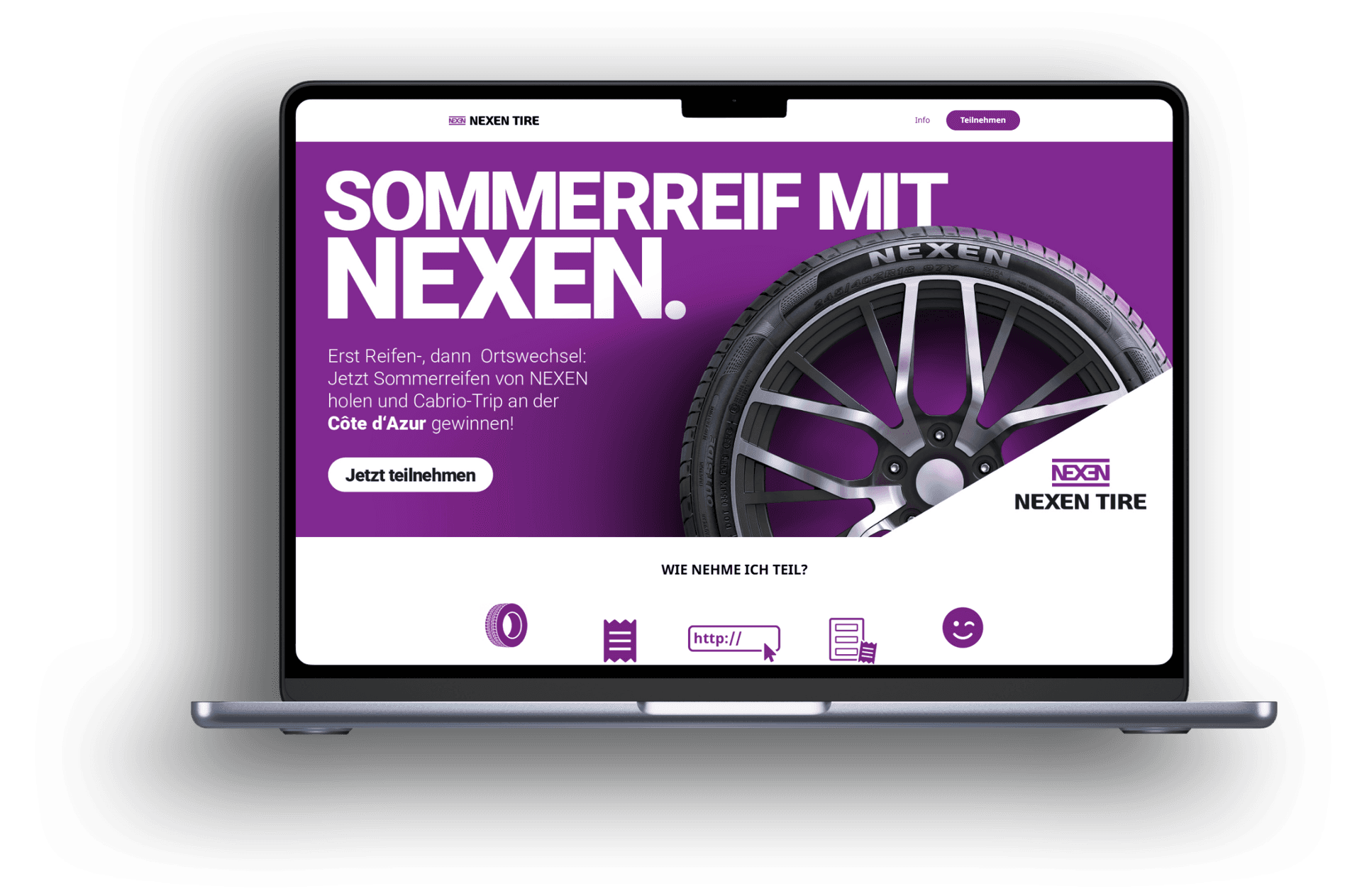

- You're spending money on ads but can't say which campaign actually drove conversions.
- Your cost per lead is rising even as you increase the budget — the campaigns aren't scaling cleanly.
- Your ads are running, but the tracking has gaps and the numbers in Google Ads and Analytics don't match.
Performance marketing ROI & scaling: services in detail
- Google AdsGoogle Ads puts your offer in front of the right person exactly when they are actively searching for it. We plan and manage Search, Shopping and Performance Max campaigns with the goal of continuously reducing your cost per acquisition. We combine precise keyword management, compelling ad copy and clean conversion tracking – so you are not just buying clicks, you are generating provable results.Learn more
- Meta AdsFacebook and Instagram Ads are the most direct way to reach new audiences – before they even search for your offer. We plan and optimise Meta campaigns focused on creatives that stop the scroll and audiences that actually buy. From the awareness funnel to retargeting, we manage every stage data-driven with clear performance measurement.Learn more
- Campaign ManagementA campaign does not start when you click 'Publish' – and it does not end there either. We take over the full operational management of your paid campaigns across all channels: daily monitoring, bid adjustments, creative rotation, A/B tests and regular reporting. You keep the overview without getting lost in dashboards.Learn more
What campaigns actually rest on
Performance marketing is not an ad problem — it is a measurement problem. Only a clean foundation enables meaningful optimisation above it.
Creative iteration
Continuous testing of new ad creatives — the strongest performance lever in the Meta ecosystem.
Controlled scaling
Expand audiences incrementally; watch marginal cost per conversion, not averages.
Learning phase & discipline
Define hypotheses, let them run long enough, introduce changes in a structured way.
Clean conversion tracking
Clear definition of what counts as a conversion and gap-free measurement — before a single bid is placed.
Each layer depends on the one below. Without valid tracking, every optimisation above it is built on sand.
Levers inside a performance account
Not all adjustable parameters have equal impact. This view shows where effort and budget discipline make the biggest difference.
- Tracking qualityWrong signals cause algorithms to optimise systematically in the wrong direction
- Creative qualityMore decisive than audience setup in the Meta ecosystem
- Learning phase disciplineDaily rebuilds prevent stable cost per conversion
- Audience targetingPrecision reduces wasted reach but cannot rescue weak creatives
- Bidding strategyEffective when data-driven — but only after clean tracking is in place
- Channel mixCross-channel synergies emerge once individual channels are already profitable
Relative weighting
Relative weighting — no promise of specific outcome figures.
What matters for Performance marketing ROI & scaling
Performance marketing is at its core a measurement problem, not an ad problem. Before you touch a single bid, you need to know what counts as a conversion, how it's captured, and what revenue sits behind it. As long as tracking is messy, Google's and Meta's algorithms optimize toward the wrong signal, and every decision after that is built on sand. The least glamorous part of the work is the most important here.
The second point is discipline during the learning phase. Accounts that get rebuilt daily never settle and therefore never deliver stable cost per acquisition. Clean work means defining hypotheses, running them long enough, and structuring changes so you can tell afterward which one actually moved the needle. In paid, restlessness is the most expensive mistake you can make.
Scaling isn't a switch you flip. A campaign that's profitable on a small budget often tips over when you ramp it up, because the audience saturates and auction prices rise. To scale cleanly you expand audiences in a controlled way, feed in fresh creatives, and watch the marginal cost per acquisition rather than the average.
Finally, in the Meta ecosystem the creative increasingly decides performance. Even perfect targeting can't rescue a weak asset. The people who win here treat creative production as a continuous testing process, not a one-time delivery.
Related goal: More leads & visibility
Learning phase takes time
Google and Meta algorithms need a ramp-up period after launch to calibrate bids and audiences. Making changes too early interrupts this process and delays the path to stable, reliable results.
Tracking is the foundation
Without clean conversion tracking, algorithms optimise against the wrong signals — which systematically skews campaign performance. A valid tracking setup is a prerequisite for any data-driven decision.
Creative drives performance
Within the Meta ecosystem, the ad creative is now the strongest performance lever, not targeting. Even precise audience setup cannot compensate for weak creative assets.
Budget that pays back
Every euro has to pay off provably. We run campaigns on clean tracking — and measurably lower your cost per lead.
Lower cost
Provably falling cost per lead or sale.
Full transparency
Clean conversion tracking makes every budget traceable.
Scale faster
Data-driven decisions instead of one-off setups.
Less waste
Precise audience targeting reaches the right people.


Let 6 AI buyers tear your landing page apart
6 AI buyer personas, 3 conversion audits and a legal check read your page like real customers – and deliver a prioritized kill report with concrete fixes.
Roast my landing page for freeFrequently asked questions
Your question isn't here? Ask us directly
What minimum budgets do you recommend for performance campaigns?
It depends on the channel and competitive landscape. As a rough guide, Google Ads campaigns in most industries need at least €1,000–2,000 per month in media spend for the algorithm to gather enough data for meaningful optimization. Meta often has lower entry thresholds.
How long does it take for performance campaigns to become profitable?
Most campaigns go through a learning phase during the first four to eight weeks as algorithms gather data and we adjust manually. After that, cost-per-conversion typically stabilizes — though the exact timeline depends on the product, market, and budget.
Can you take over existing campaigns, or only start from scratch?
Both. With existing accounts, we start with a comprehensive audit to identify weaknesses and opportunities. Existing structures can often be made significantly more efficient without rebuilding from the ground up.
How do you measure the success of a performance marketing campaign?
The primary metrics are cost per acquisition (CPA), return on ad spend (ROAS), and conversion rate — always tied to your actual business goals. We set up valid conversion tracking from the start and report on performance at regular intervals with full transparency.
Do you also work with smaller e-commerce shops?
Yes. Performance marketing isn't just for large budgets. For growing e-commerce shops, paid channels offer a fast way to build reach and revenue while organic channels are still gaining traction. We scale the intensity of our work in line with your growth.
Last updated on
READY TO REDEFINE YOUR BRAND WITH SMART DIGITAL MARKETING?


Related articles from our blog