
NODE.JS AGENCY FOR BACKENDS THAT SCALE
With Node.js we build fast APIs, event-driven services and integration layers that reliably power Shopware, mobile apps and web frontends.





What is Node.js?
Node.js is an open-source runtime that executes JavaScript on the server. It is event-driven and does not block while waiting for databases or other systems. That makes it strong for APIs, real-time features and integrations. nextlevels builds Node.js backends in TypeScript, usually with the NestJS framework.
We areNode.jsengineers
We combine modern runtimes with pragmatic architecture: clear modules, observability and automated tests – so your backend stays stable under load.
- REST & GraphQL APIs, WebSockets and message queues
- Authentication, rate limits and security best practices
- Containers, CI/CD and cloud-native operations
- Monitoring, logging and performance tuning
When Node.js fits – and when it does not
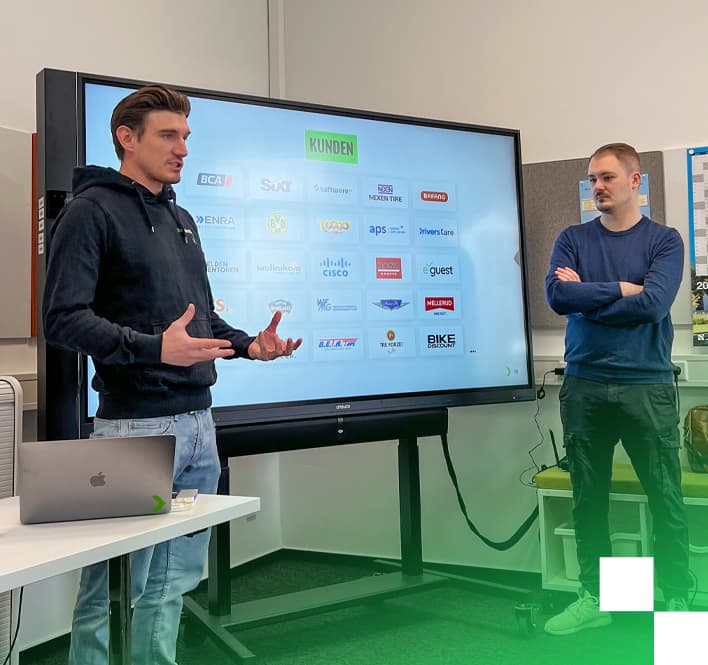
Node.js is not an all-purpose tool. This is how we classify typical tasks:
| Task | Node.js fits | Better done differently |
|---|---|---|
| APIs for web and app | Many concurrent requests that mostly wait for the database and other services. | – |
| Real time | Chat, live status, notifications over WebSockets. | – |
| Integrations | Syncing data between shop, ERP, CRM and PIM, also scheduled and via queues. | When a ready-made connector or a tool like n8n already solves the task. |
| Compute-heavy work | As the coordinator that hands work to specialised services. | Image processing, machine learning or large calculations run better in Python or a compiled language. |
| Existing PHP system | As a new service alongside it that takes over individual tasks. | A complete rebuild just because of the language rarely pays off. |
In production we only use LTS versions. The Node.js project itself recommends the same.
Event-driven, non-blocking I/O
Node.js's single-threaded event loop handles many concurrent connections efficiently – ideal for APIs, streaming and real-time signals without thread explosion.
JavaScript/TypeScript end-to-end
A unified language between frontend and backend shortens onboarding, simplifies type sharing and reduces context switching in product teams.
V8 & npm ecosystem
The V8 engine delivers heavily optimised JIT performance; millions of npm packages accelerate auth, validation, database clients and observability.
Scaling & microservices
Small, focused services can be deployed and scaled independently – Node.js is a preferred stack for gateways, BFFs and asynchronous workers.
Node.js in our projects
next-cms and NEXT Orbit
The backend of our CMS framework next-cms runs on NestJS and therefore on Node.js. NEXT Orbit, our CRM, is built on it as well.
Selected references

Real-time & high concurrency
Chat, live updates, gaming backends or IoT ingest: WebSockets and streams in Node.js keep latency low when many clients connect at once.
BFF and integration hub
A backend-for-frontend bundles calls to many systems, normalises errors and offloads mobile or web clients – Node.js is excellent as a lean orchestration layer.

What we build for you with Node.js
Bookable individually or as a project.
APIs and backends
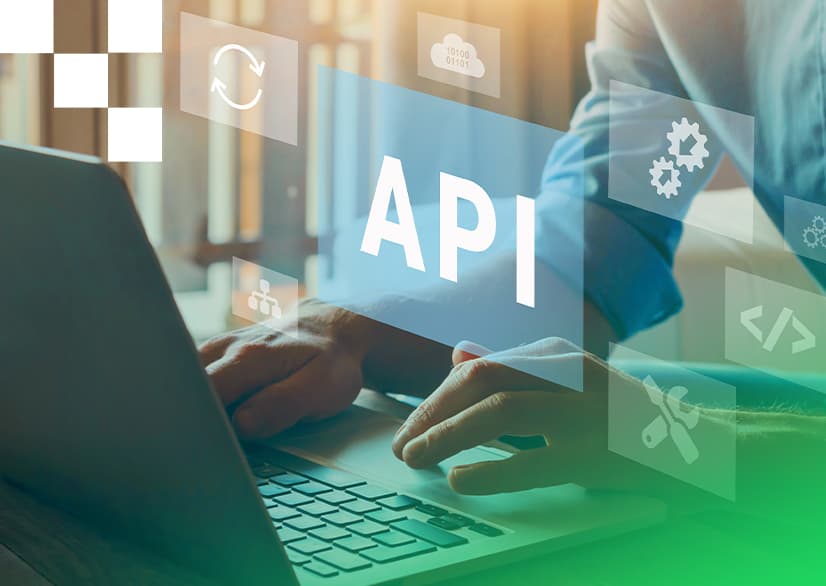
REST and GraphQL interfaces for web frontends and apps, documented with OpenAPI, with authentication and permissions.
Integrations
We connect shop, ERP, CRM and PIM. Errors are retried and logged instead of swallowed.
Real-time features
Live status, chat and notifications over WebSockets.
Background jobs
Imports, exports and scheduled tasks via queues, so load peaks do not slow your system down.
Version upgrades
We move older Node.js applications to an LTS version and replace outdated dependencies.
Operations and monitoring
Containers, deployment pipeline, logs and alerts. We run the service or hand it over to your team with documentation.
How a Node.js project runs
Cost and duration depend on scope. Our project calculator gives you a first range; the binding figure comes with the offer after the workshop.
First call
You describe the goal, the users and the systems you already have. We tell you straight away whether Node.js fits or whether another route is better.
Architecture workshop
We define the data model, interfaces and hosting and cut the scope into packages. The offer is based on that.
Delivery in iterations
We ship in short steps to a test environment, so you see every stage. Tests and code review are part of each step.
Go-live and operations
We deploy to your infrastructure or run the application for you. After that we handle updates and monitoring if you want.
Frequently asked questions about Node.js
Your question isn't here? Ask us directly
When is Node.js worth it for our backend?
When many requests arrive at once and the backend mostly waits for databases and other systems: APIs, integrations, real-time features. For long, compute-heavy tasks Node.js alone is not the best choice.
Which Node.js version do you use?
In production only LTS versions. The Node.js project recommends exactly that. From Node.js 27 onwards there will be one major version per year, and each becomes an LTS version. We therefore plan upgrades as a fixed yearly item (as of October 2026).
Node.js or PHP – which is better?
Neither is better in general. PHP is strong for classic websites and shops such as Shopware. Node.js is strong for APIs, real time and when frontend and backend should share one language. Often both run side by side.
How do you integrate Node.js with our existing systems?
As a separate layer between your systems. It talks to ERP, shop and CRM via REST, GraphQL or queues. Your existing systems stay as they are.
Who runs the backend after go-live?
You decide. We run it with monitoring and updates, or we hand over code, pipeline and documentation to your team.
What does a Node.js project cost?
It depends mainly on the number of interfaces, the requirements for real time and load, and for tests and security. Our project calculator gives you a first range; a binding offer follows after the workshop.
Your edge with Node.js
Node.js fits fast product iteration. We deliver codebases your team understands and can evolve – without hidden technical debt.
TypeScript-first where it makes sense
Clear domain models and API versioning
Experience with high-load and integration scenarios
Onshore team with direct accessibility
Read on and check
Enterprise backend development
Our service in detail.
APIs and microservices
How we cut interfaces.
REST API
The basic principle behind most interfaces.
Project calculator
A first cost range for your backend.
Ready for your Node.js project?
Let's talk about your requirements – we'll get back to you within 24 hours with concrete next steps.

Node.js Data & Insights
All postsRelated services
Related technologies
All technologies