
Anthropic Agency: Claude integration, assistants and agents
ANTHROPIC CLAUDE IN THE ENTERPRISE

Anthropic Claude is a family of powerful language models: large context windows, strong reasoning and a focus on safe, reliable output.
Anthropic Claude in figures
- 92
- 1.3.0
- 185M
What is Anthropic Claude?
Anthropic is a US company that builds the Claude family of language models. They come in several tiers: Haiku for fast, low-cost jobs such as classifying and routing, Sonnet as the balance of speed and quality, Opus for demanding work. According to Anthropic, the current models handle up to one million tokens per request.
As a decision-maker, access is what matters most: Claude runs through Anthropic's API, Amazon Bedrock, Google Cloud and Microsoft Foundry. By default, Anthropic doesn't use API inputs and outputs for training. For every model, Anthropic states an earliest retirement date, so switches can be planned. And with the Model Context Protocol (MCP), Anthropic published an open standard for connecting assistants to tools and data sources.
Whether Claude or OpenAI suits your task better is covered further down. If several models should stay interchangeable, we build the application with LangChain.

From email to CRM record
Pick one of three sample emails and process it: the model fills a fixed JSON schema, we check the answer and only then write to the CRM. One email fails the check – then you see the second attempt. The answers are prepared, the schema check runs in your browser.
- From:
- j.berger@example.com
- Subject:
- Request: equipping 40 workstations
Hello, we are moving offices in spring and need monitors and docking stations for 40 workstations. Could you send us a quote by the end of the month? Best regards Julia Berger Berger Logistik GmbH
- 1. Prompt
- 2. Model
- 3. Schema check
- 4. CRM fields
{
  "type": "object",
  "required": [
    "company",
    "contact",
    "email",
    "intent",
    "urgency",
    "summary"
  ],
  "additionalProperties": false,
  "properties": {
    "company": {
      "type": "string"
    },
    "contact": {
      "type": "string"
    },
    "email": {
      "type": "string",
      "format": "email"
    },
    "intent": {
      "enum": [
        "quote",
        "support",
        "complaint"
      ]
    },
    "urgency": {
      "enum": [
        "low",
        "normal",
        "high"
      ]
    },
    "summary": {
      "type": "string"
    }
  }
}
CRM record
- Company
- –
- Contact
- –
- –
- Request type
- –
- Urgency
- –
- Summary
- –
Prepared sample answers, no live model. Emails and companies are made up, the schema check runs in your browser.
What we build with Claude
Bookable individually or as a project. If another model – or no AI at all – fits better, we tell you up front.
How your Anthropic Claude project runs
Cost and duration depend on scope. Our project calculator gives you a first range; the binding figure comes with the offer after the workshop.
Brands that work with us



Pros and cons of Anthropic Claude
Pros
- Large context windows: contracts, policies or entire manuals can be analyzed in one pass.
- Tool use and structured outputs make Claude a solid base for assistants that take actions in your systems.
- Anthropic focuses on predictable, rule-abiding behavior, which lowers the risk of unwanted output.
- Besides its own API, Claude is available on major cloud platforms such as AWS Bedrock and Google Vertex AI.
Cons
- Long contexts cost money: the more text you send per request, the more each call costs.
- Claude is a language model; image or speech output needs additional services.
- Anthropic is a US provider, so data flows and contracts need to be reviewed with your data protection officer.
- Models get replaced regularly, and your prompts and tests have to be rechecked with every switch.
Is Anthropic Claude right for you?
A good fit if …
- you want to analyze and summarize long documents such as contracts, tenders or technical specifications.
- you need an assistant that reasons in several steps and uses tools like search or database lookups.
- your infrastructure runs on AWS or Google Cloud and you want to use the model there under existing contracts.
- you care about controllable, traceable output in production processes.
Probably not if …
- you mainly want to generate images or spoken audio.
- a simple rule or a form solves the task just as well.
- you would send huge amounts of data with every request when retrieving the relevant sections would do.
- you want to commit to one model without testing it on real cases first.
We build with Claude
Claude suits demanding language and reasoning tasks. We bring the models safely into your processes and systems.
- Large context windows for long documents
- Tool use for connected actions
- Structured outputs for deterministic processes
- Data-protection- and governance-aware integration
Claude or OpenAI?
We use both and commit per task, not up front. Four questions about your project show which way it leans, and why – the decision is made in a test with your data. The weighting follows the decision table below.
Question 1 of 4
How much text goes into one request?
All trade-offs as a table
When Claude – and when OpenAI?
We use both and decide per task, not in advance. These are the questions we settle before testing with your data:
| Decision | Lean toward Claude | Lean toward the alternative |
|---|---|---|
| Amount of text per request | Claude, if a document has to be understood as a whole – say, a contract with annexes or a complete manual. | OpenAI, if large numbers of short texts are processed. Then the price of the smallest model that works reliably matters most. |
| Existing cloud | Claude, if you rely on AWS or Google Cloud. Through Bedrock or Google Cloud, the model runs in your existing environment. | OpenAI, if you're with Microsoft and want Azure OpenAI with an EU data zone. Claude is available in Microsoft Foundry too; we then clarify the data protection questions for both routes. |
| Agents and tools | Claude, if the assistant should use many tools across several steps and you want to connect your systems via MCP. | OpenAI, if your tools are already described for the OpenAI API. Other providers support MCP by now as well, so switching isn't a fresh start. |
| Images and speech | Claude, if text and structured data are the result. Claude can read images but not generate them. | OpenAI, if the project also needs to generate images or process spoken language and you want a single provider for it. |
As of October 2026
Anthropic Claude compared
Anthropic Claude next to technologies of the same category, measured with the same public sources.
| Figure | Anthropic (Claude) | LangChain | OpenAI |
|---|---|---|---|
| Releases in 12 months | 92 | 85 | 90 |
| Median between releases | 3 days | 4 days | 4 days |
| Latest version | 1.3.0 (23/10/2026) | 1.6.0 (28/10/2026) | 7.46.0 (31/10/2026) |
| Downloads per month | 185M (npm) | 12M (npm) | 168M (npm) |
| Security advisories (12 months) | 2 | 1 | 0 |
Sources: OSV.dev, npm · as of 31/10/2026. Figures are indicators, not a verdict on quality. Go to the pages: LangChain · OpenAI
Reasoning over long contexts
Claude processes extensive documents in one pass. Contracts, knowledge bases and reports can be analyzed as a whole.
Tool use and structured output
Through tools, Claude performs actions and, on request, returns structured output – the basis for reliable automation.
A focus on safety
Anthropic emphasizes predictable, compliant behavior, lowering the risk of unwanted output in production systems.
Cleanly integrable
Via API and frameworks, Claude fits into existing stacks – with clear approvals, logging and cost control.

Selected references

Toggo App
KIDS ENTERTAINMENTiOS · AndroidCross-Platform- App
- Ionic
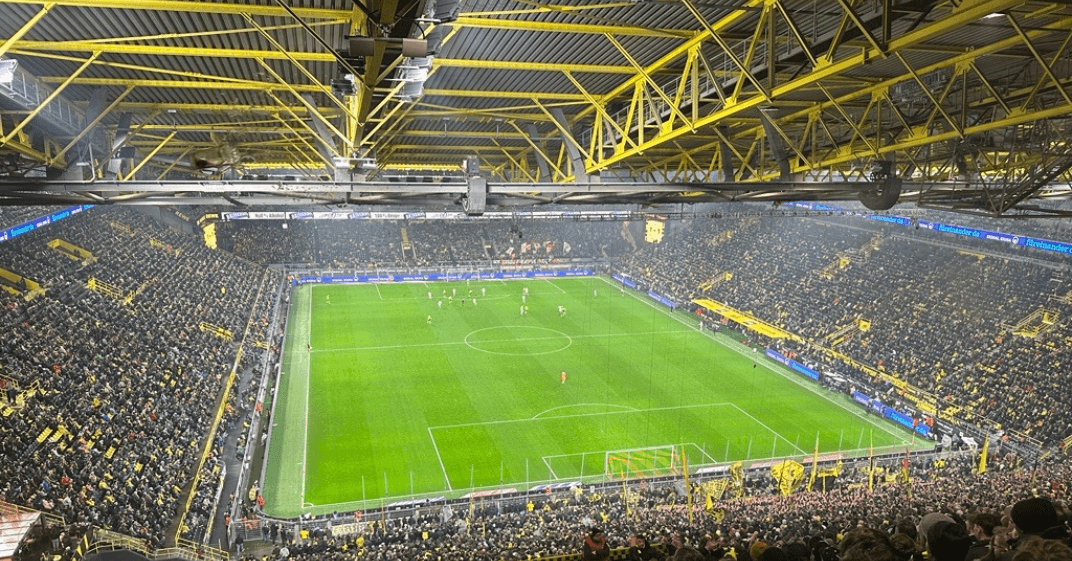

BVB Kids App
HEJA BVB – FOR KIDSHTML5-Gamesin-app- App
- Ionic


Xtreme Events
RENT EVENT MODULES VIA AN ENQUIRY BASKET349Modules migrated- E-Commerce
- Shopware


Bike Discount
EUROPE'S BIG PLAYER IN THE TWO-WHEELER SEGMENT6,000Orders / day- E-Commerce
- Shopware


KUMHO Tire Europe App
A MARKETING APP FOR A STRONG BRANDHeadlessAPI-first CMS- App
- React Native


Kumho Social
CONTENT WITH GRIP> 6MImpressions- Digital Marketing
- Social Media
Document and knowledge work
Thanks to large context windows, Claude summarizes long documents, extracts data and answers questions from your own content.
Assistants that take action
With tool use, Claude supports support, research and internal workflows – with clear limits and approvals.

Anthropic Claude Data & Insights
All postsWhen is Anthropic Claude worth it for our company?
How do you integrate Claude into our existing systems and data?
What sets Claude apart from other language models like OpenAI?
How do you keep data protection and governance under control?
What drives the cost and effort of a Claude project?
Claude & Anthropic in the enterprise: the guide
Use cases, safety and integration of Claude – concise for decision-makers and tech teams. Download now.
Download the guideAn AI project with Claude?
From use-case assessment to production integration: we bring Anthropic Claude safely into your processes.
To AI ConsultingReady for your Anthropic Claude project?
Let's talk about your requirements – we'll get back to you within one business day with concrete next steps.
What's it about?

Paul Kalisch
Executive Partner
- 30 minutes by video or phone
- You talk directly to a partner, not to sales
- You get the order of steps, risks and rough costs

Related services and technologies for Anthropic Claude
- ServiceAI Consulting & Process Optimization
- ServiceProcess Automation & AI Workflows
- ServiceProcess Analysis & AI Strategy
- ServiceAI Chatbots & Digital Assistants
- TechnologyOpenAI
- TechnologyMake
- TechnologyZapier
- TechnologyIFTTT
- TechnologyLangChain
* Sources: npm (31/10/2026) · Green: strong, orange: weaker, red: notably weak, each against usual values. A pointer, not a verdict.