

Prototyping & Wireframing

A clickable prototype is the cheapest way to test whether your app idea actually works.
Prototype Before You Build
Before expensive development time is invested, we make concepts tangible: as wireframes for structure and user flow, and as high-fidelity prototypes for realistic tests with real users. This lets you make informed decisions before the first commit is made.
The essentials of Prototyping & Wireframing
- We make app ideas tangible before development: wireframes for structure and user flow, clickable high-fidelity prototypes for realistic tests.
- We pick the right fidelity for each question and deliberately build only the paths that answer an open question – the rest stays intentionally rough.
- We gather real insight from moderated tests with people not involved in the project, documenting where they hesitate or pick the wrong path.
- From the test results we derive concrete changes before the first commit is made – a mistake in a wireframe costs hours, in finished code days.
- The clickable prototype creates a common foundation for design, development and client and gives the team a precise specification instead of vague descriptions.



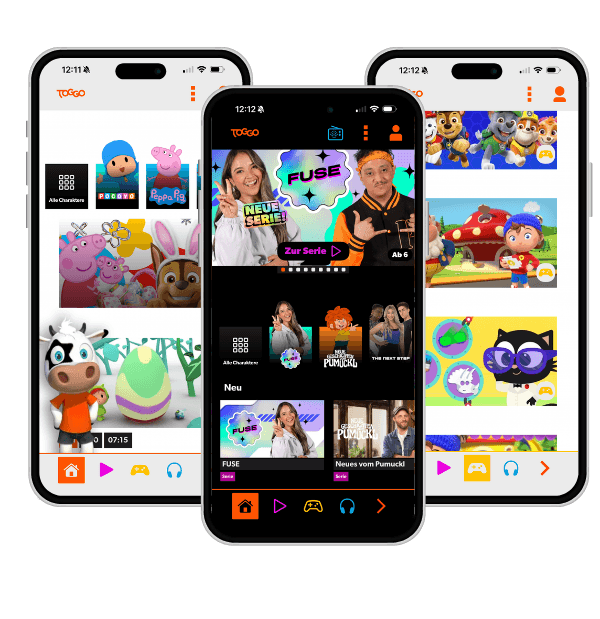
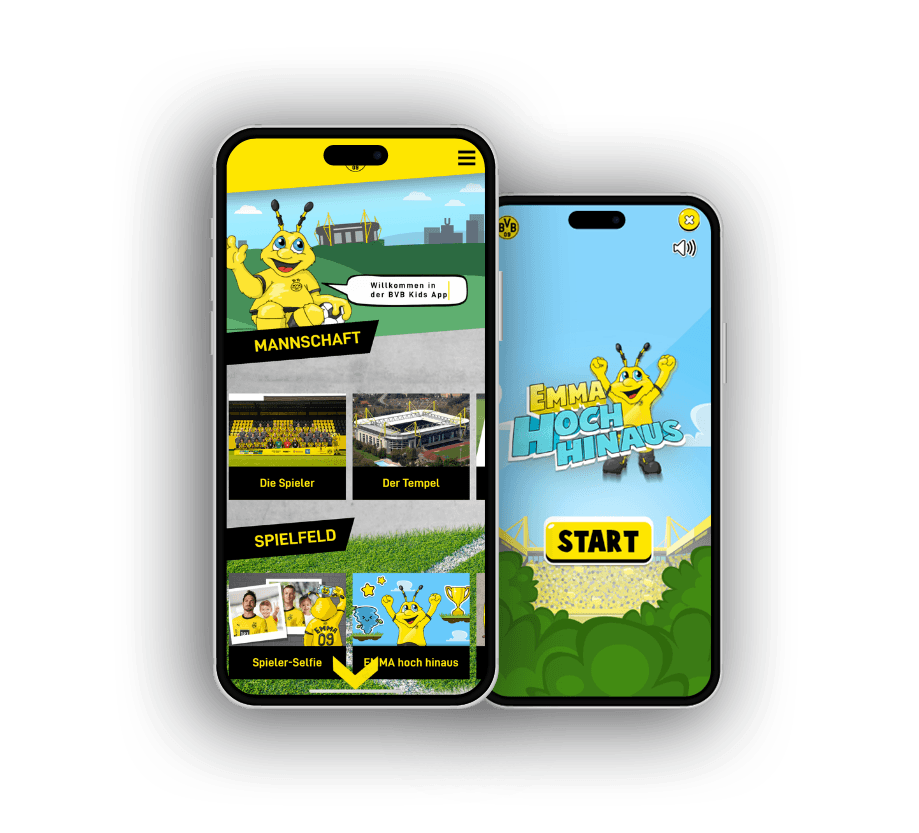
Real App Successes

- Your team spends weeks developing before realising the core flow does not work for users.
- Stakeholders do not understand what the app should do – because no one can actually touch it.
- Concept flaws only become visible during the development phase and cost many times more to fix than they would have at the wireframe stage.
Wireframing
Wireframes establish structure, information architecture, and user flow before visual details become a distraction. We sketch all key screens and flows in greyscale so everyone involved – design, development, client – shares the same mental model. Corrections at this stage take hours, not weeks.
Clickable Prototypes
Wireframes become clickable prototypes that feel like a real app – without a single line of code written. Users can complete tasks, stakeholders can make decisions based on real interaction, and the development team receives a precise specification instead of vague descriptions.
User Testing
A prototype is only valuable if it gets tested. We facilitate moderated sessions with real users and document where people get stuck, what they cannot find, and what unexpectedly works well. These insights shape the final design before any development cost is incurred.
Stakeholder Alignment
A clickable prototype is the best tool for building internal consensus and convincing external stakeholders. Instead of wireframe PDFs that everyone interprets differently, there is an interactive demo that leaves no questions about how the app is meant to work.
From concept to validated idea
Prototyping follows a clear sequence: first clarify structure, then make interaction tangible, then test with real users – only then does development begin.
Requirements & key questions
Which flows are unclear? Which assumptions need testing? We define what the prototype is supposed to answer.
Wireframing
Structure, navigation and content logic are captured as lo-fi sketches – fast, without distraction from visual design.
Clickable prototype
The most important flows are connected interactively – at the fidelity level that actually answers the open question.
User testing
Uninvolved test participants navigate through the prototype. We observe where they hesitate, fail or take a wrong turn.
Decision & handoff
We derive concrete changes from the test findings – and only then hand off to development.
Each phase delivers concrete decision input for the next.
Wireframe or high-fidelity prototype?
The right fidelity level depends on the question that needs answering. Polishing too early wastes time; staying too rough misses the test.
| Wireframe | High-Fidelity Prototype | |
|---|---|---|
| Use case | Clarify structure & navigation | Test usability & emotional impact |
| Creation effort | ✓ Low | ✗ Higher |
| Cost of changes | ✓ Minimal | ✗ Noticeable |
| Realistic user testing | ✗ Limited | ✓ Fully suitable |
| Stakeholder communication | Conceptual | ✓ Immediately tangible |
| Usable early in the process | ✓ Ideal | ✗ Counterproductive too early |
Both formats complement each other – neither replaces the other.
What matters for Prototyping & Wireframing
What matters in prototyping is the right fidelity for the right question. If the issue is structure and user flow, wireframes are enough, and more detail would only distract. If the issue is emotional impact or the usability of a specific flow, you need a high-fidelity prototype. Polish too early and you end up arguing about colours while the navigation still does not hold.
A prototype is a tool for learning, not a pre-sale of the finished app. That is why we deliberately build only the paths that answer an open question and keep the rest intentionally rough. A prototype that tries to show everything costs almost as much as the real app and ends up answering nothing precisely.
Real insight comes only from testing with people who are not involved in the project. Your own team always finds its way because it knows the concept. We watch where uninvolved users hesitate, tap wrong, or pick the wrong path, because that is exactly where the design flaw sits, not with the user.
And the value of a prototype depends on whether its findings turn into decisions. A tested prototype whose lessons no one acts on is expensive reassurance. We capture what we learned and turn it into concrete changes before the first commit is made.
Related goal: Build a new product
Test Early, Fix Cheaply
A mistake in a wireframe takes an hour to correct. The same mistake in finished code takes days. Prototyping is the most cost-effective insurance against misdevelopment.
Shared Language
Prototypes create a common foundation for design, development, and client. Misunderstandings that would otherwise surface mid-development become visible and fixable upfront.
Validate Before Investing
Before releasing a development budget, you can gather real user reactions from a prototype – and make an informed decision on whether and how to proceed.
Clickable before any code
With us you're always one step ahead technologically and tap directly into our extensive app development expertise. We take a close look at your app idea, identify key success factors and create tailor-made applications. Your visions and goals are at the heart of our joint project work.
Expert knowledge in app technologies
React Native, native iOS and Android development: we pick the stack to fit your project, not our preference.
Comprehensive user experience know-how
Intuitive operation and seamless interactions decide ratings and how long users stay in the app.
Proven track record
Published apps in the App Store and Play Store, from MVP to mature platform.
Versatile team
Concept, design, development and backend come together in one team that works without interface friction.
Long-term partnerships
We stay after launch and keep evolving your app with maintenance and updates.


What will your software or app cost?
Answer a few questions about your project – the Project Calculator shows a first range for cost and duration and the biggest effort drivers.
Start the Project CalculatorFrequently asked questions
Your question isn't here? Ask us directly
What is the difference between a wireframe and a prototype?
A wireframe is a structural sketch – black and white, no visual design, but with all elements and flows mapped out. A prototype is clickable, can be high fidelity, and simulates real usage as closely as possible.
Do I need a prototype if my team already understands the concept?
Yes – because what feels clear internally is often confusing for users. Prototype testing surfaces problems that stay invisible in internal reviews because everyone involved already knows the app too well.
How long does it take to create a clickable prototype?
For a focused core flow, typically a few days. A complete high-fidelity prototype of a complex app can take one to two weeks – still a fraction of development time.
Last updated on
READY FOR YOUR APP THAT SETS NEW STANDARDS?


Related articles from our blog