
Redis Agency
REDIS PERFORMANCE UNDER CONTROL
With Redis we lower latency, relieve databases and build more resilient systems – from session store to a distributed lightweight queue.






We areRedisarchitects
We design key strategies, TTLs and memory policies so observability and cost stay in view – without surprises during peaks.
- Cache-aside, write-through and invalidation concepts
- Sessions, locks and idempotent worker patterns
- Pub/sub and streams for real-time scenarios
- Persistence, replication and failover considerations
In-memory speed
Sub-millisecond access relieves relational databases and makes frequently read data instantly available – critical for checkout and catalogue.
Data structures for real problems
Strings, hashes, sets, sorted sets, streams: we choose structures matching your access patterns instead of generic key-value.

Distributed locks & rate limits
Race conditions and bots can be mitigated with token-based limits and short locks – without blocking your primary database.
Pub/sub & Redis Streams
Real-time notifications, fan-out and consumer groups: we build resilient message flows for live dashboards and workflow signals.

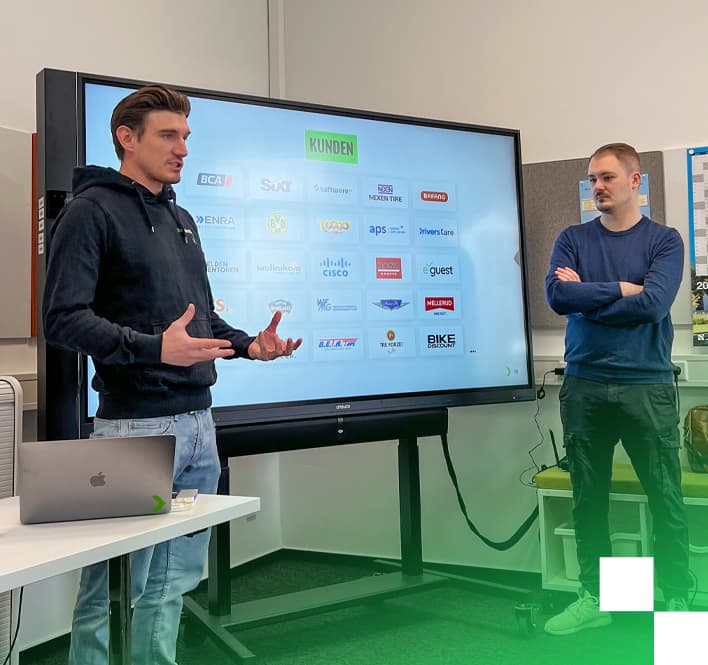
Selected references


Services &solutions
We audit existing usage or roll Redis out operationally – including runbooks.
- Caching layers for Shopware, APIs and Next.js
- Session clustering, sticky sessions and failover
- Migration from Memcached or ad-hoc caches
- Monitoring: memory, eviction, latency and slowlog
Commerce peaks & campaigns
Flash sales and TV spots spike traffic: Redis buffers read load, keeps carts stable and protects databases from stampedes.
Real-time analytics & leaderboards
Sorted sets and HyperLogLog enable rankings and approximate cardinalities with minimal latency for live experiences.

Frequently asked questions about Redis
Your question isn't here? Ask us directly
When is Redis worth it for our project?
Redis pays off as soon as repeated reads or computations start straining your database or latency becomes noticeable. We use it as a caching layer in front of Shopware, APIs or Next.js, but also for sessions, rate limiting, locks or pub/sub and streams in real-time scenarios. If your system barely sees load or the data is already fast enough, we'll honestly tell you to skip it.
How do you integrate Redis into our existing architecture?
We add Redis as an extra layer alongside your database, not as a replacement. Depending on the use case we work with cache-aside or write-through and define a clear invalidation concept so stale data never gets served. Existing session stores or caches are connected step by step, so your running operation isn't interrupted in the process.
What does a migration from Memcached or an ad-hoc cache look like?
We first analyse which keys, TTLs and access patterns are in use today and map them onto a clean key strategy in Redis. Since Redis does far more than a plain key-value cache, we check where sessions, locks or pub/sub can sensibly move over as well. We run the switch in a controlled way so hit rates stay measurable and nothing goes live unverified.
What happens to the data in Redis if the server fails?
Redis keeps data primarily in memory, but it can be safeguarded via persistence mechanisms so a restart doesn't wipe everything. For higher availability we plan replication and failover, for example for session clustering with sticky sessions. The honest distinction matters: for pure caching a data loss is tolerable, while for critical state we deliberately choose the right persistence and failover strategy.
How do you operate Redis day to day and keep costs under control?
We design TTLs and memory policies so memory doesn't grow uncontrolled and eviction stays predictable. In monitoring we keep an eye on memory, eviction, latency and the slowlog, so bottlenecks surface before the peak rather than during it. That keeps observability and cost transparent instead of letting unexpected surprises appear under load.
Your edge with Redis
Redis is small but decisive. We integrate it where it brings real value – with clear SLAs and monitoring.
Measurable latency and DB load reduction
Secure configuration and secret handling
Scaling strategies for commerce peaks
Experience with cloud and on-prem environments
Ready for your Redis project?
Let's talk about your requirements – we'll get back to you within 24 hours with concrete next steps.

Redis Data & Insights
All postsRelated services
Related technologies
All technologies