

Requirements Specification

A precise requirements specification is the basis for binding offers, smooth tenders, and clear acceptance.
Requirements Specification Service: Process & Costs
We write documents that state what the system must do — clear, complete, and easy to follow for everyone. They guide development, acceptance testing, and long-term operation.
The essentials of Requirements Specification
- We write requirements and solution specs that are clear, complete, and easy to follow — as the basis for offers, acceptance, and operation.
- The spec describes the goal and how success is measured, not the technical solution. That way it works as input for several offers.
- Every requirement gets a clear, measurable acceptance criterion. Acceptance becomes a milestone, not a dispute.
- We check each requirement for completeness and clarity, because vague wording leads to extra-scope claims later.
- We keep the format lean and link the spec to your project tools, so it stays current and gets read.
- A requirements specification for a mid-sized software project typically lands in the low to mid four-figure range; the effort depends on the number of processes, interfaces and stakeholders.



Real Software Successes
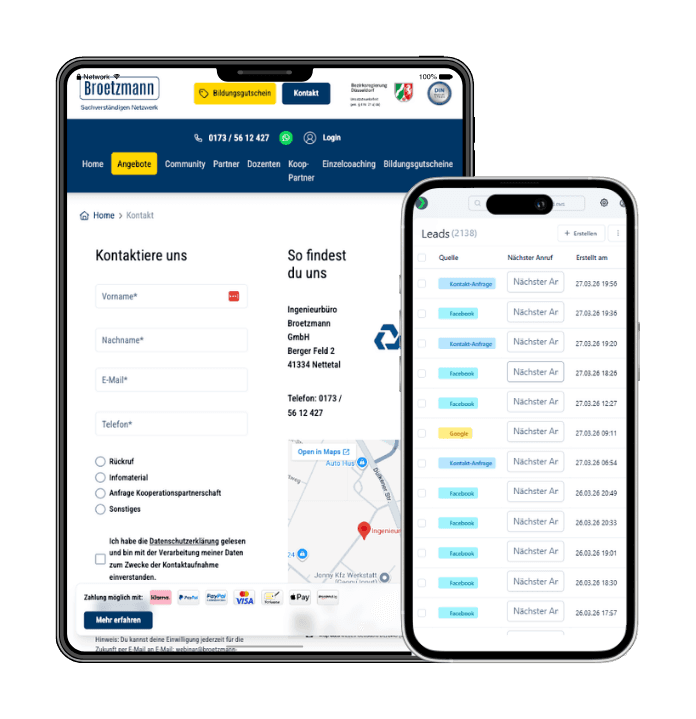
Webinar Broetzmann
KFZ SACHVERSTÄNDIGER PER WEBINAR
Webinar+ CRM booking
- Enterprise Software
- Shopware
- CRM
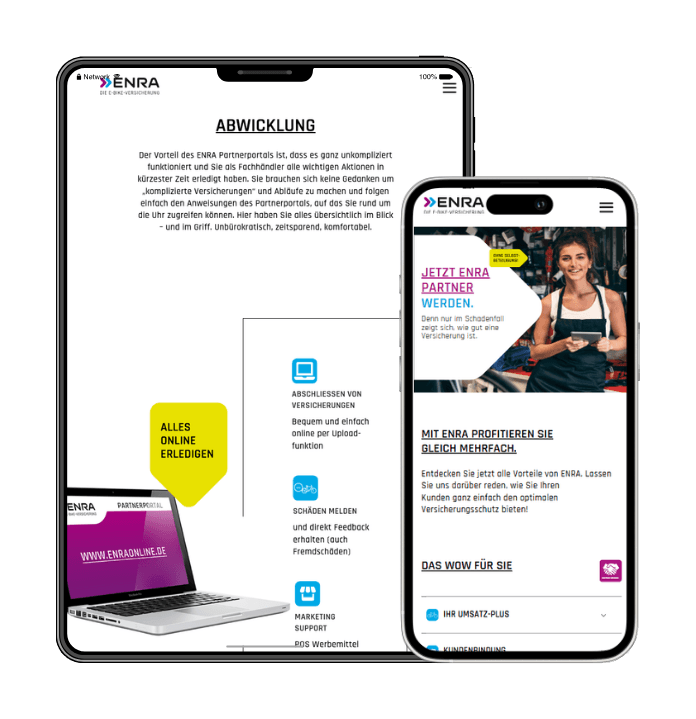

Become our next success story
Start your projectScope vs. Solution Spec
The requirements spec says what the system must do — the client's view. The solution spec says how it will do it — the contractor's view. We help you structure your document so several vendors can quote against it. The same document later serves as your acceptance checklist.
Completeness and Clarity
Most specs share the same flaws: vague wording, missing non-functional requirements, and unclear acceptance criteria. We check every requirement for three things. Is it complete? Is it clear? Can it be tested? That way, everyone reads the same requirement the same way.
Testable Acceptance Criteria
A requirement is only as good as its acceptance criterion. We give every requirement a clear, measurable target. After development, it is either met or not met. That makes acceptance a clear milestone, not a negotiation.
Usage and Maintenance
A spec goes stale when nobody maintains it. We keep the format lean and link it to your project tools. Requirements stay current for the whole project, and every change stays easy to trace.
From vague wish to binding specification
A solid requirements spec does not emerge in one pass. It moves through clear phases: gather requirements, structure them, then break them down into testable acceptance criteria.
Elicit requirements
We capture stakeholder interviews, current processes, and system boundaries — without prescribing solutions.
Structure requirements
Raw requirements are sorted (functional / non-functional / constraints) and checked for conflicts.
Define acceptance criteria
Each requirement gets measurable targets or test cases that show clearly when it counts as met.
Review and sign-off
Business side, client, and dev team review together; open items are listed and conflicts resolved.
Maintenance and change control
The spec stays a living document: changes are versioned, impact is assessed, and everyone stays informed.
Each phase ends with a result you can review; only then does the next begin.
Quality factors of a robust specification
Not every part of a spec adds the same safety. This weighting shows where to focus while writing.
- Measurable acceptance criteriaThe only basis for legally sound acceptance
- Clear wordingStops scope creep
- Complete system boundariesInterfaces and exclusions clearly described
- Lean, maintainable formatStays readable for the whole project
- Tool integrationConnected to ticket system or wiki
Relative weighting
Values show relative weight for budget and acceptance safety – not hard metrics.
What matters for Requirements Specification
A good requirements spec describes the goal and how you will know it is met. It does not prescribe the technical solution. If you dictate the solution, you waste the vendors' expertise and box yourself in.
Measurable acceptance criteria are what count. A requirement without a testable target is not a contract. It is a wish.
Vague wording is the costliest mistake in any spec. It invites a low bid, then claims for extra work later. That is where acceptance disputes start. Precise wording protects your budget: both sides read the scope the same way.
A spec is a living document, not a binder for the drawer. Keep it lean and keep it in your project tools — then it stays current and gets read. A thick tome that no one opens after the first sprint is wasted effort. It gives only false security.
Acceptance criteria are mandatory
A requirement without a measurable acceptance criterion is not a contract — it is a wish. Define clearly when something counts as done. Only then do development, acceptance, and escalation stand on solid ground.
Ambiguity costs money
Vague wording lets vendors bid low and claim extra scope later. Precise requirements protect your budget, because both sides read the scope of work the same way.
Lean beats complete
A lean, maintained spec beats a complete one that nobody reads after the first sprint. A simple format, linked to your project tools, keeps it current for the whole project.
1. Requirements workshop
Together with your business side and decision-makers we collect the goals, processes and system boundaries of your project – without prescribing solutions. The result is a structured raw list of all requirements including open questions.
2. Specification draft & review
From the raw list we write the draft: functional and non-functional requirements with measurable acceptance criteria. Business side and client review the draft together; contradictions and gaps are resolved.
3. Sign-off & handover to development
The approved version is versioned and serves as the basis for offers, tenders and later acceptance. On request we hand it straight into your ticket system or to our own development team.
On paper before it gets costly
With us you're always at the forefront of enterprise software development and benefit directly from our extensive development know-how. Together we examine your business processes, identify key optimization potential and develop individually tailored solutions. Your business goals and expectations are the focal point of everything we do.
Comprehensive technological expertise
We choose the stack per project by requirement and rely on established, future-proof technologies instead of niche dependencies.
Specialized in enterprise solutions
The real lever lies in clean interfaces: we integrate deeply into ERP, CRM and third-party systems instead of isolated solutions.
Years of experience in the software industry
From requirements analysis to operation after go-live, we know the pitfalls of large software projects.
Multidisciplinary expert team
Analysis, architecture, backend and operations come together in one team, without friction between disciplines.
Long-term business success
We build maintainable foundations that grow with your company, and stay by your side with support and further development.


Frequently asked questions
Do we need a formal requirements document when working agile?
How detailed should a requirements document be?
Can we use the same requirements document for multiple vendors simultaneously?
What does it cost to have a requirements specification written?
How long does writing a requirements specification take?
READY FOR SOFTWARE BUILT AROUND YOUR BUSINESS?


Related articles from our blog
Writing specifications and functional specifications: Template + practical guide
Specifications and functional specifications clearly separated: What belongs in what, who writes what, and how a reliable specification makes offers comparable. With a free template to download.
Vibe Coding vs. guter Code
A security lab found thousands of vulnerabilities in over 5,600 production AI apps. Vibe Coding delivers executable code quickly - but "works" is the lowest threshold in enterprise software. What really makes good code and what decision-makers should look out for.
MedusaJS: What the headless commerce framework 2026 can really do
MedusaJS crops up in almost every composable commerce discussion. But what is the framework really suitable for - and what is it not? A neutral overview of the architecture, workflow engine, TCO and realistic entry paths for decision-makers in the e-commerce SME sector.