

iOS & Android from One Codebase

Maintaining two separate codebases for iOS and Android means double the effort, double the bug fixes, and a permanent risk of feature divergence.
One Codebase for iOS & Android
We structure cross-platform projects so that platform-specific code is clearly isolated and the majority of logic is shared – ensuring consistent features on both platforms without double the maintenance burden.
The essentials of iOS & Android from One Codebase
- We structure cross-platform projects so that iOS and Android are built from a single codebase – without double the maintenance burden.
- We share business logic, state and the network layer, while camera, permissions and system dialogs stay isolated behind clearly defined interfaces.
- In well-structured apps the majority of logic is shared, which reduces maintenance overhead considerably.
- Through a shared CI/CD pipeline, iOS and Android updates go live simultaneously, so neither platform falls behind.
- Shared means efficient, not uniform: we implement platform-specific UX details selectively where they improve the user experience.




Real App Successes
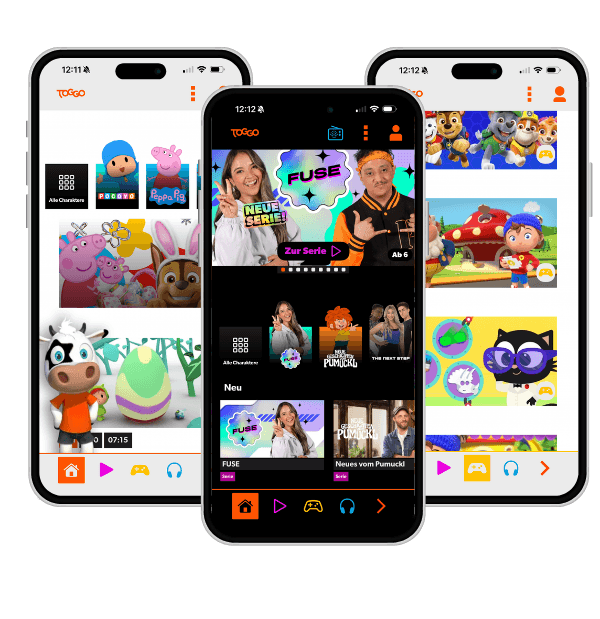


- Your iOS and Android apps have divergent feature states – Android users have been missing features that iOS has for months.
- Every bug fix needs to be implemented and tested twice – your team loses half its capacity to synchronisation.
- Platform-specific code is not isolated, and changes to one platform unintentionally break the other.
Shared Code Strategy
Not everything can be shared – and not everything should be. We define upfront what is genuinely platform-agnostic (business logic, state management, network layer) and what needs platform-specific implementation. This clear separation keeps the code maintainable and prevents workarounds that become problems later.
Platform Abstraction
Device access like camera, biometrics, or notifications is encapsulated behind abstraction layers. The app logic calls a unified interface; the platform-specific implementation stays hidden underneath. This simplifies testing and isolates platform updates.
Consistent Features
When iOS and Android are built from a shared codebase, all users receive the same features simultaneously – no iOS feature that Android users miss for months. We set up CI/CD pipelines that build and test both platforms simultaneously on every release.
Platform Conventions
A shared codebase does not mean identical UX. iOS users expect different navigation and gestures than Android users. We implement platform-specific UX details selectively where they improve the user experience – while the app logic underneath stays shared.
Where the code lives
In a well-structured cross-platform app, iOS and Android share the majority of logic. Only a small portion is deliberately isolated as platform-specific.
- Shared business logic & stateRules, data models, calculations
- Shared network & data layerAPI calls, caching, persistence
- Platform-specific adaptersCamera, permissions, system dialogs
- Per-platform UI adjustmentsiOS and Android idioms deliberately separated
Relative distribution by code area – not by file size.
Levers of a stable cross-platform architecture
Not all architecture decisions carry equal weight. These four factors determine how reliably a shared codebase performs in practice.
- Clean core / platform separationPrevents silent side effects when code changes
- Shared CI/CD pipelineSimultaneous releases on both platforms
- Cross-platform test coverageTest core once, verify platform behaviour separately
- Deliberate UI differentiationRespect platform idioms rather than forcing uniformity
Relative weighting
Relative importance – the longer the bar, the greater the impact on maintainability and release confidence.
What matters for iOS & Android from One Codebase
What matters with a shared codebase is the clean dividing line between the shared core and the platform-specific edge. Logic, state, and the network layer belong shared; access to camera, permissions, or system dialogs belongs isolated behind clearly defined interfaces. Where platform-specific code is scattered across the app, every change silently breaks the other side.
A shared codebase does not guarantee a shared experience. iOS and Android have different idioms, and precisely because the code is shared, you have to decide deliberately where the platforms should diverge. An app that looks identical everywhere feels wrong on at least one platform. Shared means efficient, not uniform.
The real lever lies in a shared CI and release pipeline. Only when both platforms are built, tested, and published from the same process do updates truly go live at the same time and no platform lags behind. Shared code without a shared delivery path solves only half the problem.
And so one platform does not quietly drag the other down, you need tests that run across platforms. A bug that appears only on Android because a shared function behaves differently there is the classic trap. We test the core once and the platform-specific behaviour deliberately per side.

We build shared codebases for iOS and Android with React Native – team, references and way of working of our React Native developers are on the agency page.
70–90% Shared Logic
In well-structured cross-platform apps, the majority of business logic, state management, and network layer is shared between iOS and Android. This reduces maintenance overhead considerably.
Clear Platform Boundaries
Platform-specific code is explicitly isolated, not scattered. This makes OS updates and platform-specific feature additions manageable without destabilising the shared core.
Simultaneous Releases
With a shared codebase and unified CI/CD pipeline, iOS and Android updates go live simultaneously – neither platform falls behind.
Both platforms, one team
With us you're always one step ahead technologically and tap directly into our extensive app development expertise. We take a close look at your app idea, identify key success factors and create tailor-made applications. Your visions and goals are at the heart of our joint project work.
Expert knowledge in app technologies
React Native, native iOS and Android development: we pick the stack to fit your project, not our preference.
Comprehensive user experience know-how
Intuitive operation and seamless interactions decide ratings and how long users stay in the app.
Proven track record
Published apps in the App Store and Play Store, from MVP to mature platform.
Versatile team
Concept, design, development and backend come together in one team that works without interface friction.
Long-term partnerships
We stay after launch and keep evolving your app with maintenance and updates.


What will your software or app cost?
Answer a few questions about your project – the Project Calculator shows a first range for cost and duration and the biggest effort drivers.
Start the Project CalculatorFrequently asked questions
Your question isn't here? Ask us directly
What proportion of code can realistically be shared?
In well-structured cross-platform apps, typically 70–90% of the logic. UI code varies more because platform-specific conventions should be respected. The exact proportion depends on the app.
How is it ensured that both platforms truly have the same feature state?
Through shared tests that run cross-platform and CI/CD pipelines that build both platforms on every commit. Features in the shared codebase are by definition available on both platforms.
What happens when one platform gets a new OS feature?
Platform-specific code is isolated, so iOS-specific adjustments do not affect Android. We can add platform-specific features without destabilising the shared codebase.
Last updated on
READY FOR YOUR APP THAT SETS NEW STANDARDS?


Related articles from our blog