Enterprise Software: Software Modernization & Legacy Migration
Software Modernization
& Legacy Migration
Outdated systems hold your business back: every change becomes a risk, qualified developers grow scarce, and security gaps stay open. We modernize legacy software and migrate it to a future-proof state — not in a risky big bang, but step by step and without endangering your ongoing operation. Using proven patterns such as strangler fig, anti-corruption layers, and parallel operation, we retire legacy systems in a controlled way while preserving the knowledge embedded in your existing system.
Challenges you'll recognise
- Every change to your legacy system is a risk — nobody dares touch it anymore because it's unclear what breaks elsewhere.
- The system depends on a few employees who still understand it — if one leaves, the knowledge is at stake.
- Outdated technology opens security gaps, qualified developers are hard to find, and maintenance costs rise year after year.
Inventory and Assessment
Before we change anything, we understand what's there. We analyze the codebase, architecture, dependencies, and technical debt of your legacy system and assess which parts are worth keeping and which need to be replaced. The result is an honest inventory that forms the basis for an informed modernization decision rather than blind activism.
Modernization Strategy
Not every legacy system needs a complete rebuild. Together with you we choose the right path — refactoring, gradual replacement, or targeted redevelopment of individual modules — and transparently weigh the effort, risk, and benefit of each option. This way you invest where the lever is greatest, instead of rebuilding everything wholesale.
Step-by-Step Migration Without Big Bang
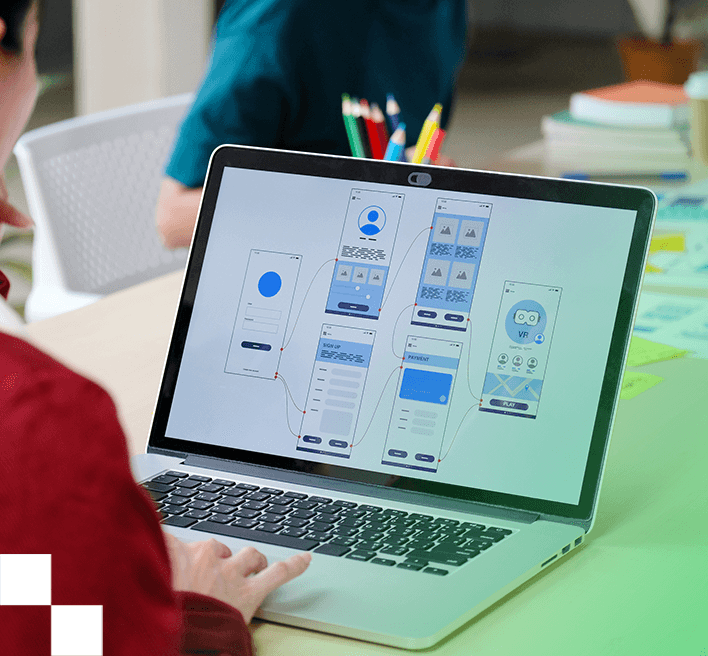
Big-bang migrations often fail and endanger operations. We rely on the strangler fig pattern: new components emerge in parallel with the legacy system, functionality is rerouted piece by piece, and the old system is dismantled in a controlled way. Anti-corruption layers cleanly decouple old and new, so both worlds coexist stably during the migration.
Data Migration and Integrity
Data is the most valuable asset in any legacy system. We migrate it carefully, clean up historically grown inconsistencies, and validate every step so nothing is lost or corrupted. Parallel operation and reconciliation runs ensure that old and new data foundations match before the legacy system is finally switched off.
Good to know
Big bang often fails
Complete rebuilds in one step are expensive and risky — many fail or massively overrun. Gradual replacement via the strangler fig pattern keeps operations stable and delivers continuous value, instead of betting everything on a single cutover date.
Doing nothing has costs too
An outdated system causes silent costs: rising maintenance effort, security risks, and dependence on a few specialists. These costs are often higher than a planned modernization — they just accrue less visibly.
Preserve knowledge before migration
Legacy systems hold undocumented knowledge in a few heads. If it isn't reconstructed and documented before modernization, it risks being lost with departing employees — a risk that complicates any later development.
Your benefits
- Step-by-step migration without big-bang risk and without downtime
- Existing knowledge is preserved instead of lost with the legacy system
- Modern technologies make the system maintainable and developer-friendly again
- Closed security gaps reduce the risk of outages and attacks
- Data integrity secured through careful migration and parallel operation
- Transparent strategy invests where the modernization lever is greatest
Success you can measure
With us you're always at the forefront of enterprise software development and benefit directly from our extensive development know-how. Together we examine your business processes, identify key optimization potential and develop individually tailored solutions. Your business goals and expectations are the focal point of everything we do.
Comprehensive technological expertise
We choose the stack per project by requirement — established, future-proof technologies instead of niche dependencies.
Specialized in enterprise solutions
Deep integration into ERP, CRM and third-party systems instead of isolated solutions — the real lever lies in clean interfaces.
Years of experience in the software industry
From requirements analysis to operation after go-live — we know the pitfalls of large software projects.
Multidisciplinary expert team
Analysis, architecture, backend and operations from a single source — no friction at the seams between disciplines.
Long-term business success
We build maintainable foundations that grow with your company — and stay by your side with support and further development.
Is this right for you?
These points help you gauge whether this service fits your situation.
- Your system runs on outdated technology for which developers are barely available.
- Changes to the legacy system are risky because dependencies and logic are barely documented.
- Knowledge about the system is concentrated in a few employees.
- Rising maintenance costs or open security gaps are putting you under pressure.
- You want to modernize but cannot afford any downtime.
Frequently asked questions
Do we have to rebuild our legacy system entirely or can it be done step by step?
How do you ensure nothing goes down during the migration?
What happens to our existing data?
Is modernization worth it, or should we just keep running the legacy system?
Our system depends on a few employees who still understand it — is that a problem?
READY TO TRANSFORM YOUR BUSINESS PROCESSES WITH CUSTOM SOFTWARE?
Whether you want to optimize existing systems or introduce new digital solutions – we'd love to meet you and explore new paths together. An initial conversation is the foundation for your success.